Aug 20, 2026
Heat and Your Dog in Austin: 7 Warning Signs, the Tether Rule, and the 5 a.m. Habit
Austin publishes its own heat guidance for pets, including seven overheating signs, a blunt pavement instruction and two tethering laws visitors rarely know about. It also opens its parks at 5 a.m., which in July is the plan rather than a convenience.
Austin, Texas10 min readPet Care & Services
Austin gives dogs a 5 a.m. park opening, and in July that is not a convenience. It is the plan.
The city publishes its own heat guidance for pets, and it is more specific than most municipal advice: seven overheating signs to act on, a list of dogs at higher risk, a blunt instruction about pavement, and two laws about leaving a dog outside that visitors rarely know exist.
Here is all of it, from Austin Animal Services and Austin Parks and Recreation, with what it means for a day out.
The short version
| What | Detail |
|---|---|
| General park hours | 5 a.m. to 10 p.m. unless otherwise posted |
| Overheating signs the city lists | 7 |
| City advice on pavement | stay off it on hot days |
| Dogs at higher risk | very old, very young, overweight, heart or respiratory disease, short-muzzled breeds |
| Tethering inside Austin city limits | prohibited unless the owner is physically present |
| Tethering in Travis County outside the city | no chains, must attach to a fitted collar or harness |
| Texas law behind it | Safe Outdoor Dogs Act, passed January 2022 |
| If your dog gets loose | text 'LostATX' to (844) 764-2125 |
All from Austin Animal Services' weather safety for pets page and the city's dog parks page.
The seven signs, which are the most useful thing on this page
The city lists them as the symptoms of overheating to know:
- extreme panting or difficulty breathing
- increased heart rate
- excessive drooling
- glazed eyes
- deep red or purple tongue
- dizziness or lack of coordination
- vomiting
Treat the first one as the end of the walk, not the fifth. By the time a dog is uncoordinated or vomiting, you are in an emergency rather than a decision.
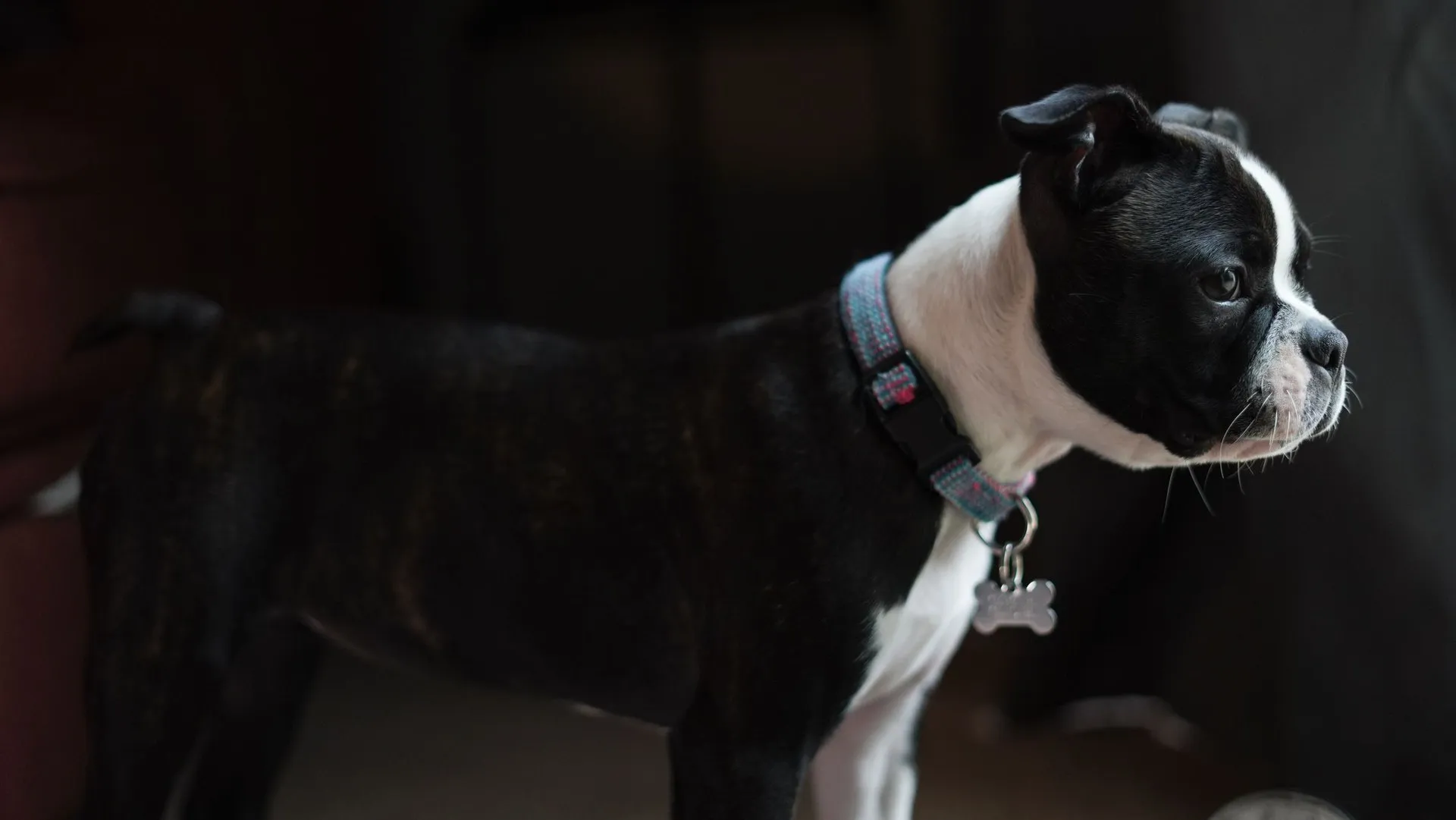
The city also names who is most at risk: "Animals are at particular risk for heat stroke if they are very old, very young, overweight, or have heart or respiratory disease." And it names the breeds whose faces make it harder: "Some breeds (like boxers, pugs, shih tzus, French bulldogs, and other dogs and cats with short muzzles) will have a much harder time breathing in extreme heat."
If your dog is on either list, the 5 a.m. habit stops being optional in an Austin summer.
What the city tells you to do
Four instructions, in its own words.
Shade and water, always. "Any time your pet is outside, make sure they have protection from heat and sun, and plenty of fresh, cold water. In heat waves, add ice to water when possible."
Less exercise, and off the pavement. "Limit exercise on hot days and stay off of pavement - it cn quickly burn your dog's paw pads." The typo is the city's, and we have left it as written.
Never the car. "Never leave your pet in the car, even with the windows down."
Know the signs, which are the seven above.
Our summer heat safety for pets guide covers the back-of-the-hand surface test, which is the practical version of the pavement rule: if you cannot hold your hand on the surface comfortably for several seconds, your dog should not be walking on it.
Why 5 a.m. is the single most useful fact about Austin
Austin Parks and Recreation states that parks are "open for public use each day from 5 a.m. to 10 p.m. unless otherwise posted."
Almost no other city in our coverage opens its parks that early, and Austin is one of the hottest we cover. Those two facts together are the answer to a Texas summer with a dog.
What that buys you. Three usable hours before it becomes a problem, in a city with 30 designated off-leash areas. The full list is in our off-leash dog parks in Austin guide.
The one exception to know. Emma Long Metropolitan Park opens at 7 a.m., not 5 a.m., and it is the city's largest off-leash site at 193 acres. In July those two hours matter more than the acreage does. Our Emma Long with a dog guide covers the rest of what makes that park different, including its entry fee and its peak-season passes.
Size becomes a safety feature in reverse. Fourteen of the city's thirty off-leash areas are under one acre. In August, a small site fifty metres from your car beats 185 acres with a long walk back.
The two laws about leaving a dog outside
This catches visitors who are used to tying a dog up outside a shop.
Inside the city: Austin Animal Services states plainly that "Tethering dogs within the city limits of Austin is prohibited by city ordinance unless the owner is physically present with the dog."
Outside the city, in Travis County: "Dogs tethered in Travis County (outside Austin city limits) cannot be on a chain and the tether must be attached to a properly fitted collar or harness."
Both sit alongside the Safe Outdoor Dogs Act, "a Texas law that passed in January 2022", which the city summarises in two parts. Adequate shelter "is defined as something that protects the dog from inclement weather and allows them room to sit, stand, and turn normally." And a tethered dog "must be able to get away from standing water and have access to drinkable water as well as shade from direct sunlight."
The city also offers help rather than only enforcement: "If you need a lightweight tether or a doghouse, we can help! Call 311 to be connected to an Animal Protection Officer." Compliance concerns go to 311 as well.
The water problem that comes with the heat
In most hot cities, water is the answer to heat. In Austin it is a second decision.
The city's algae page states that "the deaths of six dogs have been attributed to toxins since 2019", believed to be from swallowed blue-green algae, and its dog parks page warns that these algae "are most likely to be present during summer and fall." Its status line dated 2 June 2026 named Red Bud Isle, one of the city's own off-leash areas, and Walsh Boat Landing on Lake Austin.
So the hottest months are also the highest-risk water months. The city's two tests: stay out if the water is warm or stagnant or shows scum, film or algae, and stay out if it has rained in the past three days. After any contact, rinse the fur, and do it before the dog licks itself.
Full detail in our blue-green algae and your dog in Austin guide, including what to do if a dog becomes unwell.
A hot dog and questionable water is the hardest judgement call in this city. The way out of it is to carry enough drinking water that your dog is never choosing between thirst and a green edge, and to have a shaded plan that does not involve swimming.
Cold, briefly, because Austin does freeze
Not every month is the problem month. The same city page covers winter, and Austin's freezes are occasional and sharp.
Its advice: bring pets inside, because "pets are still at risk of hypothermia in freezing weather"; keep walks short; "Check their paws to make sure balls of ice haven't formed between their toes"; provide shelter off the ground with the door away from the wind and thick dry bedding, and avoid space heaters, heat lamps and heating pads because of fire and burn risk.
The signs of hypothermia it lists are shivering, lethargy, weakness and shallow breathing, with frostbite showing as "red, swollen areas or pale, white areas" on ears and tails. Our cold weather pet safety guide covers the rest.
An older dog feels both ends of this harder, and our traveling with a senior dog guide covers pacing a trip around that.
One Austin-specific winter tip from the same page, for cat owners and anyone parking outside: "Hit the hood of your car before starting the engine", because cats shelter in engine compartments.
Storms, and the loose-dog number to save
Austin gets thunderstorms and wind advisories, and the city's guidance has one item that belongs in every dog owner's phone.
"If your pet does get loose, text 'LostATX' to (844) 764-2125 to get immediate tips on what to do."
The rest of the storm advice: bring pets in, keep microchip details current, make a safe inner room with bedding and background noise, provide long-lasting chews as distraction, and check fencing, because "Strong winds can blow gates open or even blow fences down."
Our microchipping your pet guide covers the registration side, which is the part that decides whether a found dog gets home.
A heat plan for one day in Austin
5 a.m. to 8 a.m. The real day. Off-leash area, or a long walk on the Barton Creek Greenbelt while the limestone is still cool. Our hiking with a dog around Austin guide covers the trailheads.
8 a.m. to 5 p.m. Indoors, or a shaded patio with water, or the hotel. Test any patio surface with the back of your hand before the dog lies on it.
5 p.m. to 8 p.m. Shade only, and short. Ground heat lags air temperature by hours, so an evening that feels comfortable to you can still be sitting on stored heat.
Then the emergency contingency. Five Austin-area hospitals publish 24-hour cover, listed with addresses in our emergency vets in Austin guide. Heat is the emergency this city produces most, so save the nearest before the day starts, not during it.
Conclusion
Austin publishes better heat guidance for dogs than most cities, and it also gives you the tool to act on it: parks open at 5 a.m.
Learn the seven signs and stop at the first. Stay off hot surfaces. Never use the car as a waiting room. Do not tie a dog up and walk away inside the city limits, because that is prohibited unless you are standing there. And in the hottest months, treat the water as a separate decision from the heat, because in Austin those two problems arrive together.
Frequently asked questions
What are the signs of overheating in a dog?
Austin Animal Services lists seven: extreme panting or difficulty breathing, increased heart rate, excessive drooling, glazed eyes, deep red or purple tongue, dizziness or lack of coordination, and vomiting.
Which dogs are most at risk of heat stroke?
The city names dogs that are very old, very young, overweight, or have heart or respiratory disease, and says short-muzzled breeds including boxers, pugs, shih tzus and French bulldogs will have a much harder time breathing in extreme heat.
What time do Austin parks open?
Generally 5 a.m., with a 10 p.m. close, unless otherwise posted. Emma Long Metropolitan Park is an exception at 7 a.m.
Can I leave my dog tied up outside a shop in Austin?
No. Austin Animal Services states that tethering dogs within the city limits is prohibited by city ordinance unless the owner is physically present with the dog.
What is the Safe Outdoor Dogs Act?
A Texas law that passed in January 2022. The city summarises it as requiring adequate shelter that protects a dog from inclement weather and allows room to sit, stand and turn normally, and requiring a tethered dog to be able to get away from standing water and to have drinkable water and shade from direct sunlight.
Is it safe to cool a dog off in an Austin lake or creek?
Not automatically. The city attributes six dog deaths since 2019 to toxins believed swallowed from blue-green algae, and says the algae are most likely present in summer and autumn. Stay out if the water is warm or stagnant or shows scum, film or algae, or if it has rained in the past three days.
Sources
- Austin Animal Services, weather safety for pets
- City of Austin, dog parks and off-leash areas
- City of Austin, Algae in Austin's Waterways
- City of Austin, Emma Long Metropolitan Park
- City of Austin, Barton Creek Greenbelt
- City of Austin, Dog Off-Leash Area Guidelines
- PetCompass, summer heat safety for pets
- PetCompass, cold weather pet safety
- PetCompass, microchipping your pet
- PetCompass, pet first aid basics
- PetCompass, pet-friendly hotels in Austin
Guidance and hours change. Confirm with the city before you rely on any of it.