Sep 3, 2026
Training for Boulder's Voice and Sight Standard
A city that tells you to keep the dog in front of you, to watch the wind, and that a leashed dog coming toward you is leashed for a reason. Plus the question worth paying a trainer to answer.
Boulder, Colorado12 min readPet Care & Services
Boulder publishes something most cities do not: a page of coaching on how to get a dog to the off-leash standard it enforces, plus a list of questions to ask a prospective trainer.
It also says out loud that some dogs will never get there. Verbatim from the city's training tips page:
"Also, not every dog is a good candidate for off-leash hiking. Be sure you find a trainer who may understand behavior or training limits related to your dog."
That is the honest starting point. Here is the rest of what the city says, and how it maps onto the standard your dog is actually being measured against.
The standard you are training for
Not a vague idea of good behaviour. The city's Voice and Sight definition is specific, and our Voice and Sight Tag Program guide quotes it in full. The four behaviours you must be able to prevent, verbatim from the programme page:
"Charging, chasing, or otherwise displaying aggression toward any person or behaving toward any person in a manner that a reasonable person would find harassing or disturbing;" "Charging, chasing, or otherwise displaying aggression toward any dog;" "Chasing, harassing, or disturbing wildlife or livestock; or" "Failing to come to and stay with the guardian or keeper immediately upon command by such person."
And the qualifier that makes it hard, verbatim: "without regard to circumstances or distractions".
So there are really two skills. A recall that works instantly, and a dog that does not start things with people, dogs or wildlife. Everything below serves one or the other.
The city's own techniques, quoted
Eight of them, and several are about you rather than the dog. Verbatim from the training tips page:
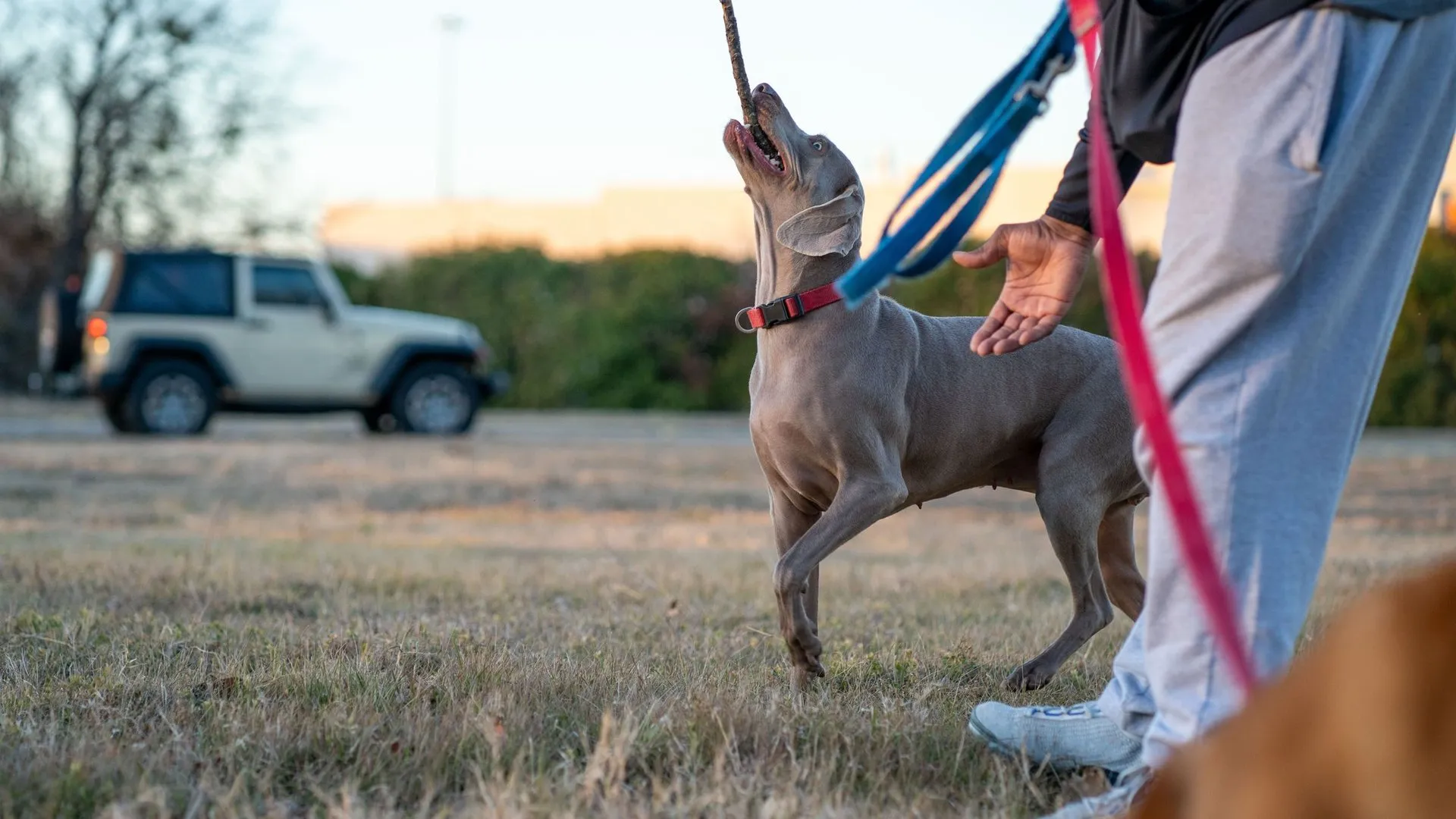
"Stay alert and attentive to where your dog is and what they are doing at all times. Keeping your dog close and in front of you will help you control him/her immediately if needed." "Consider your line of sight (like when driving a car): how far ahead can you see the open trail? Keep your dog closer on trails with limited sight lines and when conditions create poor visibility." "Be proactive by maintaining a manageable distance between you and others. This can give you more time to react when facing a possible conflict with other dogs and recreationists." "If you see another person with their dog on a leash, leash your dog or keep your dog close to you with voice commands. There is a reason why they have their dog on leash." "Read your dog's intentions. Learn their body language such as signs of unease, stress, fear, or signs of predatory interest." "Know when your dog is stressed, excited or in distress by having basic awareness of body signals and fearful behaviors. These can differ from dog to dog. A tail wagging is not always positive and hackles rising (when the hair raises up on the ridge of a dog's back) is not always negative." "Be aware of the environment and your dog's reactions to it. Are the prairie dogs more active today? Are there many other dogs? Is it so windy your voice will be carried in a direction AWAY from your dog? Are there other dog guardians who seem distracted and unable to control their own dogs?"
Four of those are worth pulling out.
Close, and in front of you. The city's wording is that "Keeping your dog close and in front of you will help you control him/her immediately if needed." In front, not behind. A dog ahead of you is a dog you can see, which is half the legal standard.
The line-of-sight analogy. Blind corners on a trail work exactly like blind corners on a road, and the response is the same: slow down and shorten the gap.
"There is a reason why they have their dog on leash." The single most useful line on the page. A leashed dog coming toward you may be reactive, recovering from surgery, in training or elderly. Your off-leash dog approaching it is the problem, whatever your dog's intentions.
And the wind. Verbatim, "Is it so windy your voice will be carried in a direction AWAY from your dog?" The capitals are the city's. Voice control is an acoustic question on a windy Front Range afternoon, and that is a genuinely non-obvious point.
The call-back game, as the city describes it
The one concrete exercise on the page, verbatim:
"In a calm environment with no stimulus factors like other dogs or people, play a call-back game rewarding your dog when they return. After your dog consistently returns, practice the call back game in a stimulating environment where there are other people and dogs around. This can support your dog to be successful under voice and sight control in the most stimulating environments where there are hikers, bikers, dogs, and wildlife."
Two stages, in order. Quiet first, then busy. The mistake most people make is starting at stage two because that is where the dog actually needs the skill.
Where to run stage two: the city answers that itself. Verbatim from the programme page: "Public dog parks allow dogs to be off-leash even if they don't meet the voice and sight control standard." And from the dog parks page, verbatim: "Dog parks not only allow social interactions between people and their pets, but also a place to train in order to safely use Voice and Sight areas in the city system."
The fenced parks are the sanctioned practice ground. Our Boulder dog parks guide covers all four sites, including Howard Heuston, which is itself a voice-and-sight area and therefore the natural intermediate step between a fence and a trail.
The city's honesty about trainers
This section is unusually candid for a government page, and it is worth reading before you spend money.
On the relationship, verbatim: "Finding a good trainer is a very personal thing, because trainers will essentially be teaching you how to teach and communicate with your dog. You will find trainers who are committed to certain types of training. This can result in very different training techniques. Make sure you are aligned with a trainer that teaches the types of techniques you believe are best for your relationship with your dog."
On what good looks like, verbatim: "A good trainer can work with a variety of people and dogs, will give you honest feedback about your chance of meeting your goals, and will use a range of methods and tools to help you achieve those goals."
"Honest feedback about your chance of meeting your goals." That is the quality to select for, and it connects back to the city's admission that not every dog is a candidate.
On persistence, verbatim: "Not every trainer is meant for every person or dog. If the first person doesn't work out, try again!"
And on where the work actually sits, verbatim: "Remember, the dog trainer is only part of the equation. Successful dog training really depends on the dedication of the dog guardian. Training requires consistent practice throughout the life of the dog. It is an ongoing partnership. Dogs are not robots. They do not learn things once and then remember them forever."
"Dogs are not robots." Which is also why the city requires the education course to be retaken at least every five years.
The questions the city tells you to ask a trainer
Verbatim, the full list:
"How long have you been training dogs?" "How many dogs have your worked with successfully?" "What is your philosophy towards training dogs?" "What training methods and tools do you use?" "Do you offer classes or private lessons?" "What are the limitations that you see my dog possibly having based on the breed and temperament?" "How long do you expect it to take to reach my goals for my dog?" "Have you been able to get dogs with histories of wildlife chasing to recall reliably off of wildlife? How?" "What kinds of dogs have you personally owned? Do you hike off leash with them? Can you recall them in any situation?" "When your clients are not able to get their dogs to obey reliably off leash, why is that?"
The last three are the good ones.
The wildlife-chasing question is Boulder-specific and it is the hardest problem in this city. A trainer who has solved it before, and can say how, is worth paying for. Our dogs and wildlife in Boulder guide covers why it matters legally as well as practically.
Asking whether the trainer hikes off lead with their own dogs is a proof-of-work question.
And asking why their clients fail invites either an honest answer about owner consistency or a defensive one. Both tell you something.
On referrals, verbatim: "If you're looking for referrals, start with neighbors or friends whose dogs are really well-behaved, and ask if they had any help. Ask a person on the trail that has a well-behaved dog. Your veterinarian may also have suggestions."
Our how to choose a dog trainer guide covers the wider vetting question, and our how to leash train a dog guide covers the foundation this all sits on.
When to leash instead of training through it
The city's own rule for that decision, verbatim:
"If you have any doubt that your dog can not meet the voice and sight control standards, play it safe and use a leash. Consider working with a trainer. We highly recommend working with a trainer because it will greatly enhance your relationship with your dog which means both you and your dog will be happier and will have a better time together."
The double negative is the page's.
And a second version of the same instruction, from the Dogs on OSMP page, verbatim: "Not sure what your dog will do when encountering wildlife on Open Space? Play it on the safe side and leash your pup until you or the wildlife has passed."
Both say the same thing: doubt means lead. Which is also the cheapest way to avoid a penalty ladder that runs from a maximum $100 first violation to not less than $300 for a third in 24 months, plus possible revocation of privileges.
The one distraction Boulder adds that most cities do not
Wildlife, and it deserves its own paragraph in a training plan because it is the failure mode with legal consequences attached.
Chasing wildlife is a listed infraction, not a training imperfection. The city's own trail page puts it plainly, verbatim: "it is illegal for you and your dog to chase or disturb wildlife or livestock."
And it is seasonal as well as constant. The city's August 2026 bear release adds a recommendation that goes beyond its own mandatory areas, verbatim: "Consider putting your dog on a leash during active bear season on all trails for your dog's protection."
So the honest test of a Boulder off-leash dog is not whether it recalls in a park. It is whether it recalls off a moving animal, in wind, on a trail with blind corners, in a month when a bear may be feeding fifty yards off the path.
That is the exact skill the city tells you to interview trainers about, and it is why the wildlife question on its list is the one worth paying for.
A realistic progression
Stage one, at home and in the garden. Call-back game with no distractions, rewarded every time.
Stage two, in a fenced dog park. Same game, in noise. Recall out of play, reward, release back into play, so the recall does not predict the end of fun.
Stage three, at Howard Heuston's voice and sight area. Unfenced, but small at about 1.25 acres, with a partial fence as the boundary and leashes required in the rest of the park.
Stage four, on a leash-or-voice-and-sight trail with good sight lines, at a quiet hour, with the lead in your hand and the dog in front of you.
Those four stages, in the order they are meant to be worked through:
| Stage | Where | What you practise |
|---|---|---|
| One | At home and in the garden | Call-back game with no distractions, rewarded every time |
| Two | A fenced dog park | The same game in noise, recalling out of play then releasing back into it |
| Three | Howard Heuston's voice and sight area | Unfenced but small, about 1.25 acres, with a partial fence as the boundary |
| Four | A trail with good sight lines | A quiet hour, the lead in your hand, the dog in front of you |
Not stage five until stage four is boring. Blind corners, busy weekends, wildlife season and On-Corridor trails with their 20-foot limit are where a nearly-reliable recall fails. Our dogs on OSMP trails guide covers which trails are which, and our Boulder's seasonal dog leash restrictions guide covers the months when the answer is a lead regardless.
Frequently asked questions
Does Boulder publish dog training advice? Yes. The city has a dog training and Voice and Sight control tips page covering techniques, how to choose a trainer and questions to ask one.
Is every dog suitable for off-leash hiking in Boulder? No, and the city says so, advising that not every dog is a good candidate for off-leash hiking and that you should find a trainer who understands behaviour or training limits related to your dog.
What is the city's recommended recall exercise? A call-back game, first in a calm environment with no other dogs or people and rewarding the dog when it returns, then repeated in a stimulating environment once the dog returns consistently.
Where should I practise off-leash recall in Boulder? In public dog parks. The city states they allow dogs off leash even if they do not meet the voice and sight control standard, and describes them as a place to train in order to safely use voice and sight areas.
What should I do if I see a dog on a leash coming toward me? The city advises leashing your dog or keeping it close with voice commands, and adds that there is a reason why they have their dog on leash.
Can wind affect voice control? Yes. The city asks walkers to consider whether it is so windy that your voice will be carried in a direction away from your dog.
Sources
- City of Boulder, Voice and Sight Program
- City of Boulder, Dogs on OSMP
- City of Boulder, Dog Parks
- City of Boulder, City to Implement Bear-Related Dog Leash Requirements for Several Trails (August 2026)
- PetCompass, how to choose a dog trainer
- PetCompass, how to leash train a dog
City guidance changes. Check the city's own pages before relying on any detail here.