Nov 17, 2026
Getting your deposit back after renting with a pet in North Carolina
Protect your North Carolina security deposit at move-out, from reading your lease to checking each deduction on the itemized list.
Charlotte, North Carolina10 min readPet Policies & FeesLaws & Rights
Your North Carolina landlord has 30 days to return your deposit once the tenancy ends and you return possession. The refund comes with an itemized written list of any damage deductions.
If the full claim is not known in 30 days, the landlord sends an interim accounting by then. The final accounting is due within 60 days, under G.S. 42-52.
Your one-time pet fee is a different matter. State law treats it as nonrefundable, so the money you can win back is the security deposit itself.
That deposit matters to a lot of Charlotte renters. Renters occupy 188,835 of the city's 381,274 occupied housing units, according to 2024 Census survey data. That is about 49.5%.
PetScreening's 2026 report found that 43% of U.S. renters report owning a pet. Applied to Charlotte, that national rate gives an estimated 81,200 renter households with a pet.
Which pet charges come back and which do not
Most Charlotte pet parents pay more than one pet charge. Only the security deposit comes back under state law.
| Charge | What North Carolina law says | Returned at move-out? |
|---|---|---|
| Security deposit | Capped by tenancy type under G.S. 42-51 and returned under G.S. 42-52 | Yes, minus permitted deductions |
| One-time pet fee | G.S. 42-53 allows "a reasonable, nonrefundable fee for pets" with no dollar cap | No |
| Monthly pet rent | North Carolina statute does not address monthly pet rent | No, you pay it month by month |
| Fee for a service animal | G.S. 168-4.5 makes charging one illegal | It should never be charged |
The pet statute, G.S. 42-53, carries the title "Pet deposits." Its operative sentence says "fee," not "deposit," and sets no dollar cap.
So the label on each charge in your lease matters. If your lease calls a pet charge a refundable deposit, ask in writing how it is returned.
Charlotte apartments rarely use that label. Across 37 Charlotte communities with pet pages on their own websites, none publishes a refundable pet deposit amount.
808 Hawthorne in Plaza Midwood shows a pet deposit field of $0.00. Every published pet charge in the group is a one-time fee or monthly pet rent.
The national mix is wider. PetScreening's 2026 operator survey, reported by GlobalPETS, found refundable pet deposits at 23.5% of operators. Non-refundable pet deposits sat at 50.9%, and pet rent at 68.6%.
How much your landlord can hold
G.S. 42-51 caps the security deposit by the length of your tenancy.
| Tenancy type | Maximum security deposit |
|---|---|
| Week to week | 2 weeks' rent |
| Month to month | 1.5 months' rent |
| Longer than month to month | 2 months' rent |
A one-year lease is longer than month to month, so the 2-month cap applies to it.
The statute does not say whether a nonrefundable pet fee counts toward this cap. Ask the leasing office how your lease treats it before you sign.
What a landlord can deduct
G.S. 42-51(a) lists what a residential security deposit may pay for:
- Unpaid rent and certain unpaid utilities
- Damage to the premises, including smoke or carbon monoxide alarms
- Losses when you do not finish the rental period
- Unpaid bills that become a lien
- Costs of re-renting, including reasonable broker fees
- Removal and storage of your belongings after an eviction (summary ejectment)
- Court costs
- Any fee permitted under G.S. 42-46
The list does not mention pets. It does not mention nonrefundable fees either. For most pet parents, the line that matters is damage to the premises.
The last item ties your deposit to late fees. G.S. 42-46 caps a late fee on monthly rent at the greater of $15 or 5% of monthly rent.
That fee applies only when rent is at least 5 calendar days late. It can be charged once per late payment. Any lease term contrary to the section is "void and unenforceable."
The 30-day and 60-day deadlines
G.S. 42-52 sets two deadlines. Both start once the tenancy ends and you return possession.
| When | What your landlord sends |
|---|---|
| Within 30 days | The deposit balance with an itemized written list of damage deductions |
| Within 30 days, if the full claim is not yet known | An interim accounting |
| Within 60 days | The final accounting |
Write down the date you hand back the keys. That is the plainest record of when you returned possession.
What pet damage costs
Pet damage is common enough to plan for. PetScreening's 2026 survey found pet damage in 31.5% of units on average, GlobalPETS reports.
The mean repair cost was $567 per affected unit. Those are national figures, not Charlotte ones.
Compare that with what you paid up front. Among Charlotte apartments that publish a first-pet fee, the median is $350, and published fees run $300 to $400.
A repair bill near the national mean would be larger than that fee. Plan as if any damage your pet leaves could come out of your security deposit.
For the full picture on move-in charges, see pet deposits and fees explained and the pet deposit guide.
1. Reread your lease before you give notice
Start with three questions. What is your tenancy type? What does the lease call each pet charge? What does it say about cleaning at move-out?
Your tenancy type sets the deposit cap. The labels tell you which charges can come back at all.
Leaving early changes the math. G.S. 42-51 lets a landlord use the deposit for losses when you do not finish the rental period. Re-renting costs, including reasonable broker fees, are on the list too.
2. Keep rent current through the last month
Unpaid rent is the first permitted use of a deposit. A late final payment can also add a late fee.
Pay your last month on time. Keep the receipt with your lease.
3. Clean up after your pet, inside and out
Walk each room with your pet's habits in mind. Look at floors, doors, window screens and carpet in the spots your pet uses most.
Then check the grounds. Pet parents in Charlotte must pick up dog waste on public or private property, including streets and parks. The rule is in the Mecklenburg County Animal Ordinance, which lists leaving waste as a nuisance.
That rule covers the patio, the courtyard and the shared lawn by your door.
4. Photograph the apartment on move-out day
Take dated photos of every room after you clean. Include close-ups of the spots your pet used most.
Keep them with your move-in photos, if you have them. Together they show what changed and what did not.
5. Hand back possession and note the date
Return every key and access fob. Ask the leasing office to confirm in writing the date you returned them.
Make sure the office knows where to send your refund. The 30-day clock is easier to track when you know exactly when it started.
6. Plan move day around your pet
Charlotte averages 49.2 days a year at 90 F or more, according to NOAA climate normals. The heat matters on move day.
The National Weather Service says it is "NEVER safe" to leave a pet locked in a car.
Its heat safety page adds that hyperthermia "can occur even on a mild day with temperatures in the 70s." Keep your pet out of the car while you load.
Public transit is not an option for pets in Charlotte. The Charlotte Area Transit System (CATS) sets the rule in its code of conduct. It allows animals on vehicles only to assist a person with a disability or in training.
The pet-friendly moving checklist and moving with pets cover the rest of the day. For hot-weather moves, read summer heat safety for pets.
7. Check the itemized list against the law
When the list arrives, read every line. Each deduction should match one of the permitted uses in G.S. 42-51.
Check the timing too. The list should arrive within 30 days, or an interim accounting should, with the final one by day 60.
If a deduction is unclear, ask your landlord in writing to explain it. Attach your move-out photos. Keep copies of everything you send and receive.
Service animals and assistance animals
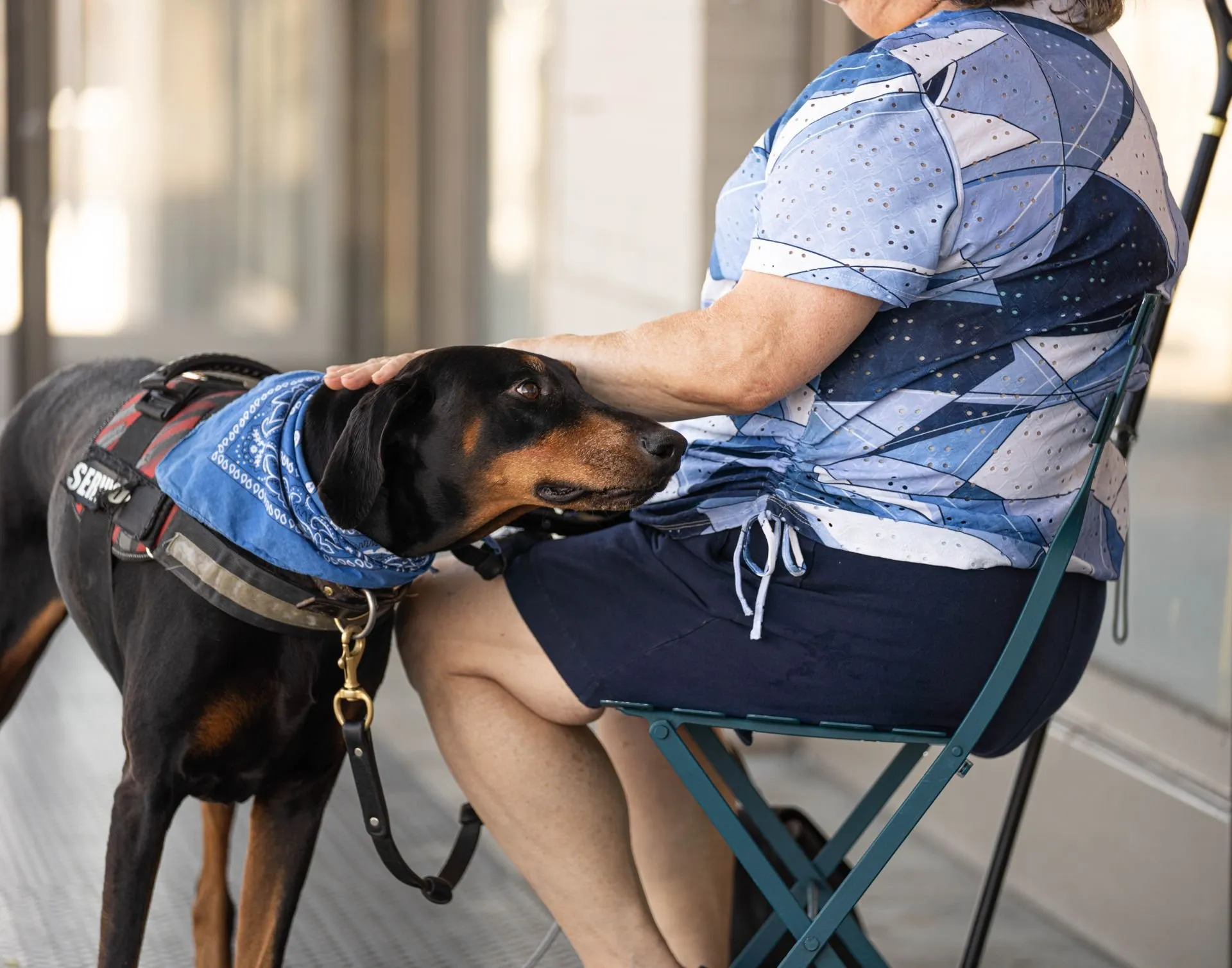
North Carolina protects service animals in rentals. G.S. 168-4.5 makes it illegal to deny service animal rights, including by charging a fee for a service animal.
A violation is a Class 3 misdemeanor. If a service animal fee appears on your move-out statement, ask your landlord to explain it in writing.
Emotional support animals (ESAs) sit in a different place in 2026. A HUD memo of May 22, 2026 treats requests for trained assistance animals as "presumptively reasonable." Requests to waive pet policies for untrained ESAs "are not."
That means an ESA may be billed like a pet under your lease. ESA and service animal housing rights explains the wider rules.
Pet charges at Charlotte apartments
The table below lists Charlotte communities that publish both a one-time pet fee and monthly pet rent. Each one labels its pet fee non-refundable on its own website.
| Apartment community | One-time pet fee | Monthly pet rent |
|---|---|---|
| Heather Ridge | $300 per pet | $30 per pet |
| The Oasis at Regal Oaks | $300 per pet | $35 per pet |
| Mallard Glen and Adams Place | $300 per pet | $30 per pet |
| Berkeley at Dilworth | $300 per pet | $25 per pet |
| Bell Riverbend Village | $300 one pet, $600 two pets | $25 per pet |
| The Pines | $350, $250 second pet | $20 per pet |
| 1100 South | $350 per pet | $20 per pet |
| IMT Ballantyne | $350 per pet | $25 per pet |
| Hawthorne at the Greene | $350 per pet | $25 per pet |
| Contour at NoDa | $350 one pet, $550 two pets | $25 per pet |
| Taylor Farms | $350 per pet | $35 per pet |
| Magnolia Terrace | $400 per pet | $20 per pet |
| 808 Hawthorne | $400 first pet, $150 second | $30 |
None of these fees comes back at move-out. Your security deposit is the money you can still protect.
Pet policies change, so confirm the current policy with the leasing office before you apply. You can also browse pet-friendly apartments on PetCompass.
Leave the apartment clean, keep your records, and the law's deadlines work in your favor.
Frequently asked questions
How long does a landlord have to return a deposit in North Carolina?
Thirty days after the tenancy ends and you return possession. The landlord sends the deposit balance with an itemized list of damage deductions. If the full claim is not known by then, an interim accounting is due in 30 days. The final accounting is due within 60 days.
Can my landlord keep my pet fee when I move out?
Yes. G.S. 42-53 lets a North Carolina landlord charge a reasonable, nonrefundable fee for pets. It is not part of the refundable security deposit, so plan on not getting it back.
Can a North Carolina landlord deduct pet damage from my deposit?
G.S. 42-51 lists the permitted uses of a security deposit, and damage to the premises is one of them. The list does not mention pets. Any damage deduction should appear on the itemized list your landlord sends.
How much security deposit can a North Carolina landlord hold?
G.S. 42-51 sets the cap by tenancy type. It is 2 weeks' rent for week to week and 1.5 months' rent for month to month. Any tenancy longer than month to month has a cap of 2 months' rent.
Can a landlord charge a fee for a service animal in North Carolina?
No. G.S. 168-4.5 makes it illegal to deny service animal rights, including by charging a fee for a service animal. A violation is a Class 3 misdemeanor.
Sources
- G.S. 42-52: return of security deposits (FindLaw)
- G.S. 42-51: security deposit limits and permitted uses (FindLaw)
- G.S. 42-53: pet fees (FindLaw)
- G.S. 42-46: late fees and authorized fees (FindLaw)
- G.S. 168-4.5: service animal penalties (FindLaw)
- ACS 2024 1-year tenure for Charlotte city (Census Reporter)
- PetScreening 2026 State of Pets in Rental Housing Report
- GlobalPETS: four in five U.S. rental operators report an increase in pet-owning tenants
- HUD FHEO memo on assistance animals, May 22, 2026 (copy hosted by DREDF)
- City of Charlotte: Mecklenburg County Animal Ordinance
- CATS Code of Conduct
- National Weather Service: Children, Pets and Vehicles
- NOAA 1991 to 2020 annual climate normals, Charlotte Douglas Airport
- Heather Ridge pets page
- The Oasis at Regal Oaks pet-friendly page
- Mallard Glen and Adams Place pets page
- Berkeley at Dilworth pet-friendly page
- Bell Riverbend Village pet policy
- The Pines
- 1100 South pet policy
- IMT Ballantyne amenities
- Hawthorne at the Greene amenities
- Contour at NoDa amenities
- Taylor Farms amenities
- Magnolia Terrace amenities
- 808 Hawthorne