Aug 19, 2026
Altitude and Your Dog Near Colorado Springs: 8 Stops by Elevation, and Where the 8,000 Foot Line Falls
PetMD puts the altitude threshold for pets above 8,000 feet. Pikes Peak labels every highway stop with its elevation, from 6,707 feet to the 14,115 foot summit. Together they let you pick a turnaround point before you set off.
Colorado Springs, Colorado11 min readPet Care & Services
The altitude advice for dogs has a number attached to it, and Pikes Peak conveniently labels every stop on its highway with an elevation. Put those two facts together and you can plan exactly where to turn around, rather than guessing.
The number is 8,000 feet. According to PetMD, the effects of high elevation on pets "only begin above 8,000 feet." The first labelled stop on the Pikes Peak Highway sits at 8,540 feet. So the line is crossed early, and everything above it is worth thinking about.
The eight stops, by elevation
Every elevation below is published by Pikes Peak on its own hiking and stops page. The 8,000 foot marker is inserted to show where the threshold falls.
| Elevation | Stop | What is there |
|---|---|---|
| 6,707 ft | Barr Trail trailhead | Hiking, birding, sightseeing, restrooms |
| 8,000 ft | the threshold PetMD names | Above this, watch your dog |
| 8,540 ft | Crowe Gulch | Birding and wildlife, hiking, picnicking, restrooms |
| 9,160 ft | Crystal Creek Reservoir and Visitor Center | Biking, birding, boating, eat and shop |
| 9,229 ft | South Catamount Reservoir | Biking, birding, boating, fishing |
| 9,354 ft | North Catamount Reservoir | Biking, birding, boating, fishing |
| 11,800 ft | Elk Park | Biking, birding, hiking, picnicking |
| 12,780 ft | Devils Playground | Birding and wildlife, hiking, sightseeing |
| 14,115 ft | The summit | Summit Visitor Center |
Read that table as a decision tool rather than an itinerary. A dog that is comfortable at Crowe Gulch has cleared the threshold by 540 feet. A dog that is struggling at Elk Park is nearly 4,000 feet above it, and the answer is to go down rather than push on to Devils Playground.
What the 8,000 foot figure actually means
It is a floor, not a guarantee. PetMD's framing is worth quoting properly, because it is more reassuring than most altitude warnings: it emphasises that these effects "only begin above 8,000 feet, and most places that high have a population of less than 500," so very few pets are affected.
That is the useful context. Living in Colorado Springs is not an altitude problem for a dog. Driving up Pikes Peak is a different activity, because you gain thousands of feet in under an hour without any of the acclimatisation a walker would get.
PetMD also describes what high elevation can do to dogs and cats, listing vomiting, headache, and in extreme cases a build-up of fluid. That last item is the serious one, and it is the reason the advice is always to descend rather than wait.
This guide is not veterinary advice. If your dog has a heart or airway condition, ask your own vet before you plan a 14,000 foot drive, not after.
Which dogs should not do the summit
Some dogs are already working harder to breathe at sea level, and altitude compounds it. Be conservative with any of the following.
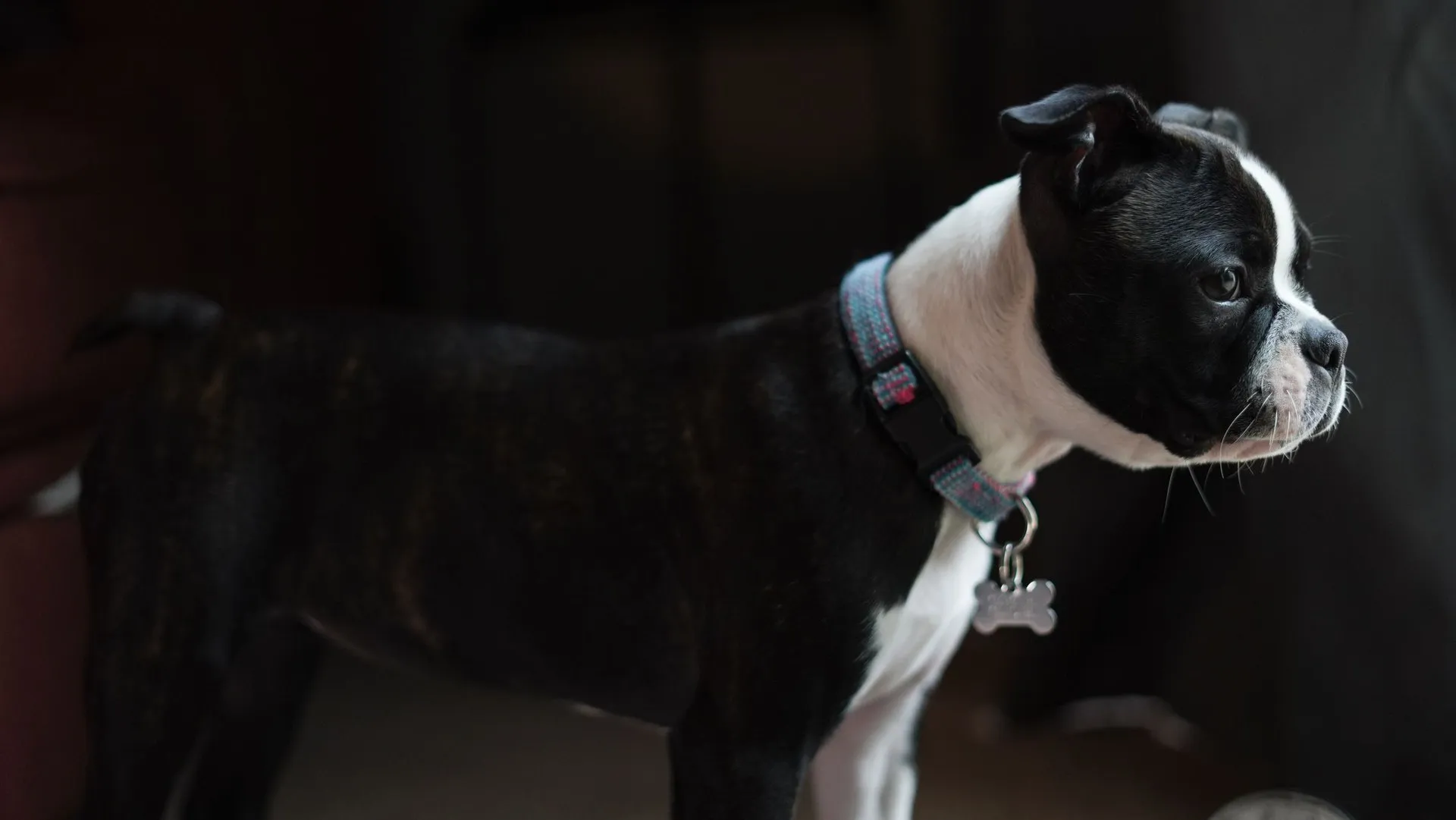
- Flat-faced breeds. Pugs, bulldogs, boxers and similar have less airway to work with before altitude takes anything away.
- Senior dogs. Reduced cardiac and respiratory reserve is the issue. Our traveling with a senior dog guide covers the wider picture.
- Puppies. Still developing, and poor at self-regulating effort.
- Overweight dogs. More tissue to oxygenate, less efficiency doing it.
- Any dog with a known heart, lung or airway condition. This is a conversation with your vet.
For those dogs, the honest plan is the lower stops. Crowe Gulch at 8,540 feet with restrooms and picnicking is a genuinely pleasant destination, and it is 5,575 feet below the summit.
The signs, and the single response
Watch for these above the threshold.
- Panting that does not settle when the dog rests
- Unusual lethargy, or reluctance to move
- Stumbling, or loss of coordination
- Drooling more than normal
- Vomiting
- Pale gums
- Any difficulty breathing
There is one response and it is not complicated: lose elevation. Stop the activity, get back in the car, and drive down. Descent is the treatment, and every stop on that table above you is a step in the wrong direction.
If the signs are severe or do not improve as you descend, Colorado Springs has two hospitals with round-the-clock cover. North Springs Veterinary Emergency & Specialty is on (719) 920-4430 and Southern Rockies Animal Emergency + Specialty is on (719) 473-0482, and Southern Rockies asks you to call ahead so the team can prepare.
The things that make altitude worse without being altitude
Thin air is only part of it. Three other factors stack on top, and all three are easier to manage.
Sun. High-altitude sun is far stronger than the air temperature suggests. A dog can overheat at Devils Playground on a day when you are wearing a jacket, because the sun is doing work the thermometer is not reporting. Our summer heat safety for pets guide covers the mechanics.
Dry air. Colorado is dry, and dogs lose water through panting faster than owners expect. Carry more water than you think you need and offer it at every stop, not just at the top.
Effort. A dog that trots alongside a car park at 12,780 feet is doing more work than the same trot at home. Keep activity gentle at the high stops and save the running for the city, where the seven off-leash areas and El Paso County's Bear Creek Dog Park give a dog 25 fenced acres at a sane elevation.
The practical trap: you cannot fall back on the shuttle
Plan the descent as carefully as the climb, because your options are narrower with a dog. Both of the assisted ways up and down Pikes Peak refuse pets in writing.
The Pikes Peak Cog Railway states: "Pets, No, we cannot allow pets on board the train." The official Pikes Peak FAQ states: "Are pets allowed on the shuttle? Pets are unfortunately not permitted on the shuttle. However, service animals are welcome aboard."
So if your dog is struggling at the summit, the way down is your own vehicle. There is no handing the dog to a shuttle while you finish the trip.
One more logistics point from the mountain's own hiker transport guidance: anyone picking a hiker up at the summit must purchase Pikes Peak Highway admission, and from May 1 through September 30 a timed-entry permit as well. Drivers must follow posted hours and leave the summit before closing. If you are splitting a group between hikers and a dog in a car, that is real cost and real timing to coordinate.
The mountain also notes an emergency hiker room on the south side of the Summit Visitor Center for hikers who cannot get down and whose ride cannot reach the summit.
Barr Trail, and why it is not a dog hike for most people
Barr Trail is a 13 mile one way climb from Manitou Springs to the 14,115 foot summit, rated difficult. Pikes Peak names June through September as generally the best window, while warning about snow, cold temperatures and sudden changes.
Thirteen miles gaining more than 7,000 feet is a serious undertaking for a fit human. For a dog it means crossing the 8,000 foot threshold early and then spending the entire rest of the day above it, with no way to shorten the day except turning around.
If you want a trail rather than a car park, the mountain lists shorter options including Mount Esther Trail at 3 miles one way, rated moderate to difficult. The trailhead stops lower down are the better dog country.
Pikes Peak also asks all visitors to follow Leave No Trace principles, staying on designated trails, packing out trash, leaving rocks and wildflowers, not carving into trees, and observing wildlife from a distance. It asks visitors to plan ahead, respect other visitors, and choose durable surfaces when stopping along a trail. On a leash, all of that is straightforward, and the durable-surfaces point is easier to honour with a dog on six feet of lead than on twenty.
The reservoir stops are the ones worth building a dog day around. Crystal Creek at 9,160 feet has a visitor center, and the two Catamount reservoirs at 9,229 and 9,354 feet list boating, fishing, biking and birding between them. All three sit under 400 feet apart in elevation, so you can spend a whole day just above the threshold without ever climbing into the thin air at Elk Park or Devils Playground.
Where to spend the day instead, if the summit is out
Cheyenne Mountain State Park permits leashed dogs, but on far less of the park than its trail count suggests. Per Colorado Parks and Wildlife, leashed dogs are welcomed on approximately 2 miles of designated trails: Acorn Alley, Bobcat Way, Raccoon Ridge and a portion of Soaring Kestrel. The park states plainly that "Dogs are not allowed on any other trails or in the backcountry," and requires a 6 foot or shorter hand held leash. The park has 21 trails and 29 miles of hiking in total, so read that 2 miles carefully. It is open 5 a.m. to 10 p.m. and a daily vehicle pass is $10 to $15.
Garden of the Gods is free, opens at 5 a.m., and welcomes dogs on a six foot leash under its own park rules. At city elevation it asks nothing unusual of a dog's lungs.
For where to sleep, our pet-friendly hotels in Colorado Springs page lists what each property charges and allows, and the wider PetCompass hotel directory covers the region. The official Visit Colorado Springs site is the place to check conditions before a mountain day.
Conclusion
Eight labelled stops between 6,707 and 14,115 feet, and a threshold at 8,000 feet that you cross before the first of them. That is an unusually clear way to plan a mountain day with a dog.
Pick a turnaround elevation before you set off, watch for panting that will not settle, and treat descent as the answer rather than something to try later. And remember that neither the train nor the shuttle will take your dog, so the car you drove up in is also the car you come down in.
Frequently asked questions
At what altitude do dogs get altitude sickness?
PetMD states that the effects of high elevation on pets only begin above 8,000 feet, and notes that very few pets are affected because most places that high have populations under 500. On the Pikes Peak Highway the first labelled stop, Crowe Gulch, sits at 8,540 feet, so the threshold is crossed early.
How high is the summit of Pikes Peak?
14,115 feet, according to Pikes Peak's own trail description of Barr Trail, which climbs 13 miles one way from Manitou Springs to that summit.
What are the signs of altitude sickness in a dog?
Panting that does not settle with rest, unusual lethargy, stumbling or loss of coordination, increased drooling, vomiting, pale gums, and any difficulty breathing. PetMD also lists vomiting and headache, and in extreme cases a build-up of fluid.
What should I do if my dog shows altitude sickness on Pikes Peak?
Stop the activity and descend. Losing elevation is the treatment. If signs are severe or do not improve on the way down, Colorado Springs has two hospitals with 24 hour cover, North Springs on (719) 920-4430 and Southern Rockies on (719) 473-0482.
Which dogs should avoid the Pikes Peak summit?
Flat-faced breeds, senior dogs, puppies, overweight dogs, and any dog with a known heart, lung or airway condition. Those dogs are better served by the lower stops such as Crowe Gulch at 8,540 feet, which has restrooms and picnicking.
Can I take my dog down Pikes Peak on the shuttle if it gets sick?
No. The official Pikes Peak FAQ states that pets are not permitted on the shuttle, though service animals are welcome. The Cog Railway also states it cannot allow pets on board. Your own vehicle is the only way down with a dog.
Sources
- Pikes Peak, America's Mountain, hiking and stops by elevation
- Pikes Peak, America's Mountain, visitor FAQ
- Pikes Peak, America's Mountain
- Pikes Peak Cog Railway, frequently asked questions
- PetMD, can pets get altitude sickness
- Colorado Parks and Wildlife, Cheyenne Mountain State Park
- Garden of the Gods Park, park rules including dog rules
- El Paso County Parks, Bear Creek Dog Park
- Southern Rockies Animal Emergency + Specialty, emergency services
- Visit Colorado Springs, the official destination site
- PetCompass, traveling with a senior dog
- PetCompass, summer heat safety for pets
- PetCompass, pet-friendly hotels in Colorado Springs
- PetCompass hotel directory
This is general guidance and not veterinary advice. Elevations and permit rules are as published by Pikes Peak and change between seasons. Speak to your own vet about your dog before a high-altitude trip.