Sep 3, 2026
Dogs in MRCA Parks: The Best Written Dog Rule in Los Angeles
A leash is not a defence here. The control standard is defined by the outcome, not the equipment, and the friendly dog that greets strangers on a lead is exactly what it is written about.
Los Angeles, California10 min readThings to DoPet Care & Services
The Mountains Recreation and Conservation Authority runs a great deal of the parkland Angelenos actually use, and it publishes its park ordinance in full. Its dog section is the most carefully drafted dog provision we have found in any city in this series.
It defines control in a way that catches a leashed dog. It requires you to carry waste bags visibly. It caps you at three dogs whether they are on lead or not. And it explains why, before it tells you what.
Why, in the ordinance's own words
Verbatim from the MRCA park ordinance:
"(a) The Authority finds that based on its own management experience and that of other park agencies it is in the public interest to strictly regulate the presence of dogs so as to provide for the comfort and safety of park visitors, protect against pollution, and minimize adverse impact on native wildlife."
Three stated purposes: visitor comfort and safety, pollution, and native wildlife. Most agencies in this series publish a rule and leave you to infer the reason. This one starts with a findings clause.
The control standard, and why it is stricter than a leash
This is the provision worth reading twice. Verbatim:
"(b) No person shall permit a dog to be off leash on parkland, except as provided herein. No person shall permit a dog to be out of that person's immediate control. For the purposes of this section, "immediate control" means that degree of control that would prevent any uninvited contact between the dog and any person. The fact that a dog may be on leash does not excuse the obligation to exercise immediate control over such animal."
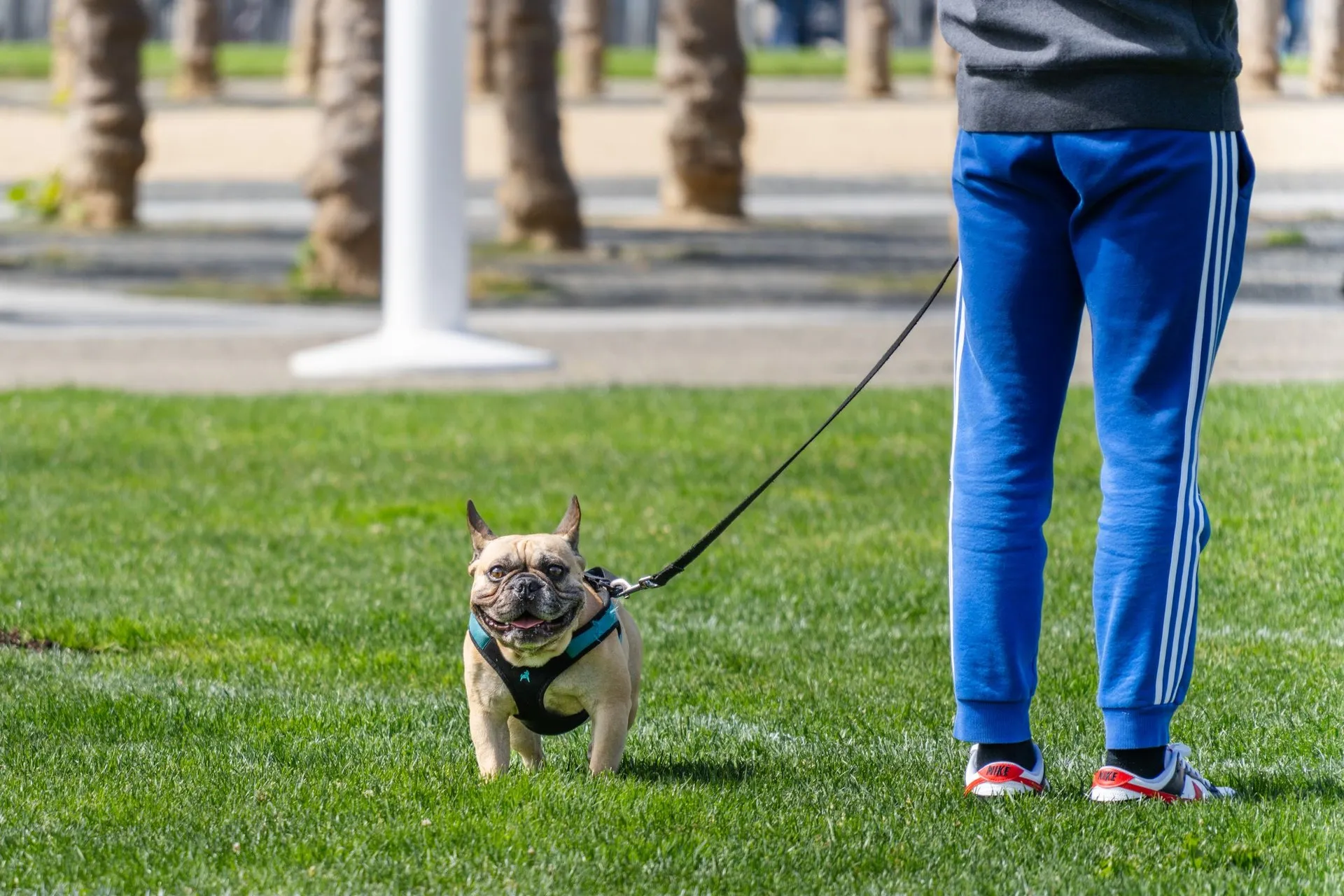
Read the last sentence again. A leash is not a defence. If your dog makes uninvited contact with a person while on a six foot lead, you have failed the immediate control standard, because the standard is defined by the outcome rather than by the equipment.
"Prevent any uninvited contact between the dog and any person" is the clearest control definition in this whole corpus. Compare Dennis and Eastham on Cape Cod, whose bylaws allow voice control by a handler as an alternative to a leash without defining what that control amounts to, covered in our Cape Cod off-leash areas guide. Compare Cape Cod National Seashore, which specifies six feet and leaves control to inference. MRCA specifies both, and makes the outcome the test.
Practical consequence: the friendly dog that greets strangers on a lead is the dog this section is written about.
Waste bags, visibly carried
Verbatim:
"(f) No person shall fail to clean up after any dog on parkland under that person's control or allow the dog's excrement to remain on parkland. Every person in possession of any dog must visibly carry the means to pick up and dispose of dog excrement at all times."
"Visibly carry" is unique in this series. Every other jurisdiction requires you to clean up. MRCA requires you to be visibly equipped to clean up, at all times, whether or not your dog has done anything. That is an enforceable status rather than an enforceable event.
Put the bags on the outside of the lead, not in a pocket. It costs nothing and it is what the ordinance asks for.
Three dogs, on or off lead
Verbatim:
"(h) No person may be in possession of more than three dogs, either on or off leash, at any time."
Note "either on or off leash". This is a possession limit, not a control limit, so three well behaved dogs on three leads is still the ceiling.
And it lines up with the City of Los Angeles household limit, which caps a residence at three dogs over four months, cited to LAMC 53.06.1 in our Los Angeles dog licence guide. Three at home, three in the park. Whether that is coordination or coincidence, the practical number is the same across both.
If you walk dogs professionally, there is a separate provision. Verbatim from § 3.13.1:
"Except as allowed by § 3.13, no person shall use parkland for any commercial use without a permit issued by the Executive Officer or Executive Officer's designee. Commercial uses include, but are not limited to, fitness instruction, dog walking, food vending, commercial tour vehicle use, and ancillary services for filming."
Commercial dog walking on MRCA parkland requires a permit, named explicitly alongside fitness instruction and food vending. Our hiring a dog walker guide covers what to ask a walker, and in Los Angeles whether a walker holds an MRCA permit is now a fair question to add to that list.
Off-leash areas exist, conditionally
MRCA does not run open off-leash parkland by default, but its ordinance provides for it. Verbatim:
"(g) Where conditions permit, the Executive Officer or the Executive Officer's designee may post an area where dogs may be present off-leash so long as the owner or person in possession of the dog (1) exercises that degree of control that enables such person to recall the dog on command, and (2) carries a leash at all times so as to be able to restrain the dog if necessary."
Two conditions, both on you: recall on command, and a leash carried. That is the same structure Summit County uses in Utah, which our Park City leash law guide covers, where an e-collar counts as restraint only if a leash is on your person.
This guide names no specific MRCA off-leash area, because the ordinance makes them a matter of posting rather than of publication, and the rules page and FAQ we read do not name any. Look for the posted sign at the site.
Closures, aggression and liability
Three more provisions, each short and each consequential. Verbatim:
"(c) The Executive Officer or the Executive Officer's designee may prohibit all dogs from entering any area of a park by posting a dog closure, and no person shall bring or permit a dog to enter a closed area."
"(d) No person shall bring an aggressive dog onto parkland."
"(e) No person shall bring a dog onto parkland which shall cause injury or damage to other persons or animals. Responsible persons bringing dogs onto parkland which cause injury or damage to other persons or animals shall be held liable for violations of this Ordinance."
Subsection (d) is a prohibition on bringing, not on biting. An aggressive dog is not permitted on the parkland at all, which puts the decision before the incident rather than after it.
And each of these sections carries its own penalty cross-reference, to § 5.0(a) and to a specific subsection of § 6.2.1(b). The ordinance's own numbering distinguishes them: the aggressive dog provision points to § 6.2.1(b)(2) and the injury provision to § 6.2.1(b)(4), while the control, closure, waste, off-leash and three dog provisions all point to § 6.2.1(b)(1). What the cross-references tell you is that MRCA grades these offences.
Here is every dog provision in the ordinance with the penalty subsection it points at.
| Subsection | What it covers | Penalty cross-reference |
|---|---|---|
| (b) | Immediate control, and no dog off leash | § 6.2.1(b)(1) |
| (c) | Posted dog closures for any area of a park | § 6.2.1(b)(1) |
| (d) | Bringing an aggressive dog onto parkland | § 6.2.1(b)(2) |
| (e) | Bringing a dog that causes injury or damage | § 6.2.1(b)(4) |
| (f) | Cleaning up, and visibly carrying the means to | § 6.2.1(b)(1) |
| (g) | Posted off-leash areas, recall and a carried leash | § 6.2.1(b)(1) |
| (h) | Three dogs maximum, on or off leash | § 6.2.1(b)(1) |
The general park rules that apply on top
From the MRCA park rules page, the rules relevant to a dog walk, verbatim:
"Parks open: sunrise to sunset." "Dogs must be kept on leash, under owner's control, and cleaned up after." "No traveling off of authorized or official trails." "No altering trails or cutting of new trails." "No drones." "Permits are required for special uses of parkland."
Sunrise to sunset is the hours rule, which is tighter than it sounds in winter. And "no traveling off of authorized or official trails" applies to you as well as your dog, which matches the national park requirement covered in our hiking with dogs in the Santa Monica Mountains guide.
Sunrise to sunset is tighter than it sounds
Worth planning around rather than assuming, because it is the rule most likely to catch a working dog owner.
"Parks open: sunrise to sunset" is the whole hours rule, and it moves with the calendar. In a Los Angeles December that closes the parkland well before most people finish work, and it does so without any published grace period. Compare Huntington Dog Beach in Orange County, which runs 5 am to 10 pm all year, in our Huntington Dog Beach guide.
The practical answer is the morning. Sunrise is the one hour of the day when this parkland is both open and cool, and it is also when the immediate control standard is easiest to satisfy because there is nobody around to make uninvited contact with.
Where dogs are not allowed
One named exclusion. Verbatim from the MRCA parks FAQ:
"Yes. Dogs are allowed on leash and under the owner's immediate control in most MRCA parks. Dogs are not allowed at"
The sentence completes with King Gillette Ranch as a link on the page.
"Most MRCA parks" plus King Gillette Ranch as the exception, and note that the FAQ uses "immediate control", the ordinance's defined term, rather than the rules page's looser "owner's control". The ordinance governs.
Beyond that, closures can be posted at any time under subsection (c), so the sign at the trailhead is the current answer even when a website is not.
How this fits the rest of Los Angeles
MRCA is the readable agency. Our Los Angeles dog rules guide sets out that gap. MRCA parkland is therefore the best documented dog walking in the city, which is a slightly odd outcome and a useful one.
LA County beaches ban animals outright, with no season or hours, per our dogs on Los Angeles beaches guide.
And the city's own ownership rules travel with you: mandatory sterilisation over four months, a licence tag worn at all times off your premises, and three dogs at home. Our Los Angeles mandatory spay and neuter law guide covers the first, and emergency vets in Los Angeles covers what to do if a walk goes wrong.
Frequently asked questions
Are dogs allowed in MRCA parks? Yes, on a leash and under the owner's immediate control, in most MRCA parks. Dogs are not allowed at King Gillette Ranch, and closures can be posted for any area of any park.
What does immediate control mean? The ordinance defines it as that degree of control that would prevent any uninvited contact between the dog and any person, and states that a dog being on leash does not excuse the obligation to exercise it.
Can I take my dog off leash on MRCA land? Only in an area posted for it, and then only if you can recall the dog on command and you carry a leash at all times. The ordinance leaves the posting to the Executive Officer or a designee.
How many dogs can I walk? Three. The ordinance prohibits possession of more than three dogs at any time, either on or off leash.
Do I need a permit to walk dogs professionally? Yes. Commercial use of parkland requires a permit, and the ordinance names dog walking specifically among commercial uses.
Do I have to carry waste bags? Yes, visibly, at all times. The ordinance requires every person in possession of a dog to visibly carry the means to pick up and dispose of dog excrement.
Sources
- Mountains Recreation and Conservation Authority, Park Ordinance
- Mountains Recreation and Conservation Authority, Park Rules
- Mountains Recreation and Conservation Authority, Parks FAQ
- Santa Monica Mountains National Recreation Area, Pets
- LA Animal Services, Animal Licenses
- PetCompass, hiring a dog walker
The ordinance's penalty schedule was not read, so no fine amounts appear here. Posted closures at the site govern.