Aug 26, 2026
Walking a Dog in New Orleans Heat: What the City Actually Says
New Orleans does not legislate a temperature for dogs. It publishes a test you can do with the back of your hand, and a hot-car rescue law with five steps.
New Orleans, Louisiana12 min readPet Care & ServicesThings to Do
New Orleans does not write a temperature into law for dogs. It writes a test you can do with your hand.
From NOLA Ready, the city's Office of Homeland Security and Emergency Preparedness: "Asphalt can get very hot. If it's too hot for you to touch comfortably, it's probably unsafe for your pet to walk on."
We are starting there because it is the most useful sentence the city publishes about dogs and heat, and because we want to be clear about what is not here. Some cities legislate a number. Las Vegas writes 105 degrees Fahrenheit into an ordinance and requires active cooling above it. We looked for a New Orleans equivalent and did not find one. There is no published local heat ordinance for animals that we could verify.
What New Orleans has instead is detailed, practical guidance from two bodies: NOLA Ready, and the Louisiana SPCA, which holds the city's animal control contract. That guidance is better than most cities' and it is worth reading properly.
The rules that are rules
Three things are actually enforceable, and none of them is about temperature. Here they are, with what each one requires and who publishes it.
| Rule | What it requires | Stated by |
|---|---|---|
| Leash | Dogs must be on a leash, with no published exception | Louisiana SPCA |
| Tethering | Illegal to tether or chain a dog | Louisiana SPCA |
| Outdoor shelter | Five solid sides, raised off the ground, clear of debris and standing water | Louisiana SPCA |
| Indoor crates | Not adequate as outdoor shelter | Louisiana SPCA |
Leash, always. The Louisiana SPCA's Animal Control FAQ answers "Does my dog have to be on a leash?" with one word: "Yes." Heat does not create an exception, and an early morning empty street does not either.
No tethering, at all. Verbatim: "No. It's illegal to tether (tie up/chain) a dog." Note what this means in a hot climate. A great many heat incidents involve a dog tied in a yard with no shade and a tipped water bowl. New Orleans has removed the tethering option entirely, which is a stronger position than the cities that merely cap it at a number of hours.
A real shelter, if the dog lives outside. Verbatim: "Dogs that live outside must have a shelter made of 5 solid sides (4 walls and a roof) to provide protection against heat, cold and rain. The shelter should be placed in an area free of debris, feces (waste/poop), and standing water." The same answer requires it to sit raised off the ground so standing water cannot get in, which we are paraphrasing because the word the source uses is one our house style does not print. And the disqualifier: "A kennel or crate intended for indoor use is not considered adequate outdoor shelter for an animal."
So the enforceable law is about restraint and housing, not thermometers.
The car rule, in capitals
The Louisiana SPCA does not hedge on this one, and neither will we. Verbatim from its weather page:
"NEVER, under any circumstances, leave your pet in a parked car! The temperature inside a car can reach 120 degrees in only a few minutes."
The source prints a degree symbol; the word is ours. The figure is theirs.
Not with the windows cracked. Not for the length of one errand. Not in the shade of a garage, which in this city is often the hottest air in the block because it is enclosed and still.
And if you see a dog in a car
Louisiana has a law for this, and the Louisiana SPCA publishes both the law and a procedure. Follow the procedure, because the immunity is described in the context of it.
The law, verbatim from the Animal Control FAQ: "Louisiana's Good Samaritan Law, also known as Act No. 360, went into effect on August 1, 2018, and protects you from civil liability in the event of a necessary rescue of an animal or minor left alone in a car. It provides immunity from liability for property damage or trespass to a motor vehicle if the damage was caused while rescuing a minor or animal in distress."
The steps, in the order the Louisiana SPCA gives them:
Look for the owner first. Verbatim: "Explore in a 30-foot radius around the car to search for the owner." A thirty-foot radius is a specific instruction. It is roughly the shopfronts either side.
If you cannot find them, call 911. The Louisiana SPCA's animal control response operates on 911 and, per its locations page, "Emergencies are responded to 24/7."
Then, if you enter, do it with minimum damage. Verbatim: "Enter the vehicle with as little damage as possible and remove the animal."
Leave a note. Verbatim: "write a note to leave for the vehicle owner letting them know that appropriate authorities have been contacted. Leave your contact information, your reason for entry into the vehicle, and the location of their animal."
Stay put with the animal. Verbatim: "remain in a safe location with the animal while you wait for emergency personnel to arrive."
The Louisiana SPCA's own framing is worth repeating: follow these steps "carefully to make sure you are acting in accordance with the law." We are not lawyers and this is not legal advice; we are telling you what the city's contracted animal control agency publishes.
The walking rules that actually work here
New Orleans heat comes with humidity, which is the part that catches out people who have moved from a dry hot climate. A dog cools by panting, which is evaporative, and evaporation is slower in wet air. Ninety degrees in Louisiana is not ninety degrees in Arizona.
Both official sources land in the same place on timing.
NOLA Ready: "Take dogs for shorter walks, and avoid the hottest parts of the day by walking them early in the morning or in the evening. Bring water and a bowl with you on walks."
Louisiana SPCA: "Exercise your dog in the morning or evening when temperatures are cool."
Which is why the parks' opening hours matter more here than anywhere. City Park and Audubon Park both open at 5am, per City Park's rules and Audubon's rules. NOLA City Bark opens at 5:30am six days a week. In a city where the afternoon is unusable for much of the year, a 5am gate is the single most valuable amenity on offer.
Four practical rules that follow.
Do the hand test on the ground, not the air. Five seconds, back of the hand, on the pavement you are about to walk on. NOLA Ready's version: if it is too hot for you to touch comfortably, it is unsafe.
Keep to grass where you can. NOLA Ready: "If you must bring them outside, keep them on grass as much as possible. Dog shoes or socks can also help protect your pet's paws from being burnt."
Carry water for the dog, separately from your own. The Louisiana SPCA makes the same point about evacuation supplies, and it applies to a walk: your dog's water is not a share of yours.
During a heat advisory, cut the exercise rather than the timing. NOLA Ready: "limiting their exercise while the heat advisory is in effect." An advisory day is a day for a short walk and indoor enrichment, not a rescheduled long one.
Breed matters, and the city says so
This is unusually specific for a municipal page, and it is worth quoting in full because it corrects a common mistake.
NOLA Ready: "Certain breeds may be at especially high risk for heat related illness, such as those with flat faces or long coats. Take special care to keep them cool. Brushing may help pets with long, thick coats, but do not shave your pet, their coat's layers help protect them from sunburn and overheating."
Two things there.
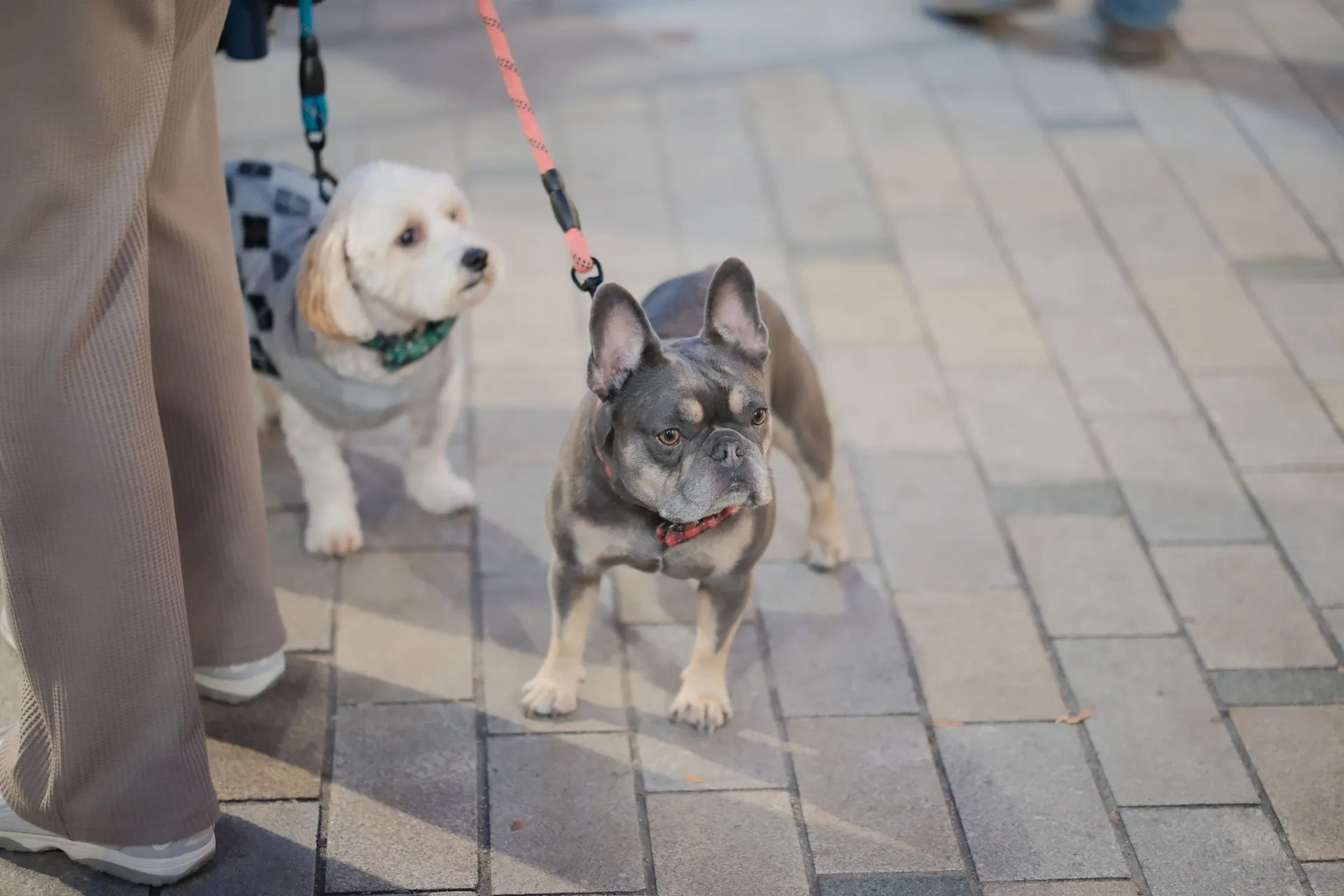
Flat faces are a real risk factor in this climate. A bulldog, a pug, a boxer, a Boston terrier: shortened airways make panting less effective, and panting is the cooling system. If you own one of these breeds in New Orleans, the afternoon is not available to you for most of the year.
Do not shave the dog. It feels like the obvious kindness and the city's own guidance says otherwise. The coat insulates in both directions and it is what stands between a pale-skinned dog and sunburn.
Cooling, and two things you can do today
NOLA Ready's suggestions are cheap and they work: "Put ice in your dog or cat's water bowl to help them cool off, or give them frozen broth as a treat."
The Louisiana SPCA adds shade and water for any dog spending daytime outside, and one more: "Consider a kiddie pool to help your pet cool off." It also flags a hazard specific to the region: "Dogs in truck beds can suffer injury or heatstroke if the truck bed is too hot."
Knowing when it has gone wrong
The two sources publish overlapping but not identical lists, and we are giving you both because the longer one includes signs the shorter one leaves out.
NOLA Ready's list. "Excessive panting and drooling", "Red gums or tongue", "Increased heart rate", "Vomiting or diarrhea".
The Louisiana SPCA's list. "excessive panting, difficulty breathing, increased heart rate, drooling, weakness, seizures, bloody diarrhea, vomit" and a raised body temperature, which is the one item we are paraphrasing because the word the source uses is one our house style does not print.
The additions in the second list are the ones that mark a later, worse stage: difficulty breathing, weakness, seizures, blood.
What to do. NOLA Ready: "Pour cool water over them and contact a veterinarian right away." Louisiana SPCA: "If your pet is suffering from any of the above symptoms, transport them to your veterinarian or an emergency clinic immediately. Affects from heatstroke can be long lasting and deadly."
Note that both say cool water and a vet, not ice water and waiting. Our pet first aid basics guide covers the handling, and our summer heat safety for pets guide covers the wider picture.
And know where you are going before you need to. Overnight and after-hours veterinary cover in New Orleans is thin. Two hospitals publish 24-hour hours on their own sites, and one of them is across the parish line in Metairie. Sorting that out on a cool day is worth an hour of your time. Our notes on emergency vet, what to know cover what to expect when you arrive.
Heat and hurricane season are the same season
Worth stating, because they compound. The months when walking is hardest are the months when an evacuation is possible, and a dog that has been under-exercised and over-heated all week is not a dog in good shape for a long car journey.
NOLA Ready's pet page handles both hazards in one place, which tells you how the city thinks about them. The Louisiana SPCA's disaster preparedness page is where the evacuation detail sits, including the instruction: "Please know we do not board animals during a hurricane."
If you are planning around the season, keeping water containers filled and medication stocked serves both purposes. Our pet emergency preparedness checklist covers it.
A month-by-month version, roughly
December to February. The comfortable stretch. Long walks at any hour. The Louisiana SPCA's winter guidance still applies: pets should not be kept outdoors in cold weather, and puppies, kittens and senior pets "should never be left outdoors."
March to April. Widening window. Afternoons start to close.
May to September. Morning and evening only. Hand test every time. Heat advisories mean shortened exercise, not rescheduled exercise. This is also hurricane season, so the go bag should be assembled.
October to November. Reopening. Still humid into October, so keep the hand test in the routine.
If you are visiting during the hot months, book somewhere within walking distance of shade and plan the day around dawn. Our New Orleans hotel directory and roundup of pet-friendly hotels in New Orleans are the starting points.
Frequently asked questions
Is there a heat law for dogs in New Orleans? We found no published local ordinance setting a temperature threshold for animals in New Orleans. What the city publishes is guidance from NOLA Ready and the Louisiana SPCA, plus enforceable rules on leashing, tethering and outdoor shelter.
How hot is too hot to walk a dog in New Orleans? NOLA Ready's test is the ground rather than the air: if the asphalt is too hot for you to touch comfortably, it is probably unsafe for your pet to walk on.
When should I walk my dog in New Orleans? Both NOLA Ready and the Louisiana SPCA advise early morning or evening. City Park and Audubon Park both open at 5am and NOLA City Bark opens at 5:30am on most days.
Can I leave my dog in the car for a few minutes in New Orleans? No. The Louisiana SPCA states never, under any circumstances, and notes that the temperature inside a car can reach 120 degrees in only a few minutes.
What can I do if I see a dog locked in a hot car in Louisiana? Search a 30-foot radius for the owner, call 911 if you cannot find them, enter with as little damage as possible, leave a note with your contact details and reason for entry, and stay with the animal until help arrives. Louisiana's Good Samaritan Law, Act No. 360, effective 1 August 2018, provides immunity from liability for property damage or trespass during a necessary rescue.
Should I shave my dog for New Orleans summer? No. NOLA Ready advises against shaving, stating that the coat's layers help protect against sunburn and overheating. Brushing is suggested instead for long, thick coats.
Sources
- NOLA Ready, Pet Owners
- Louisiana SPCA, weather precautions
- Louisiana SPCA, Animal Control FAQs
- Louisiana SPCA, disaster preparedness
- Louisiana SPCA, locations and hours
- New Orleans City Park, Park Rules & Policies
- Audubon Nature Institute, Audubon Park & Riverview Rules
- PetCompass, summer heat safety for pets
- PetCompass, pet first aid basics
- PetCompass, emergency vet, what to know
- PetCompass, pet emergency preparedness checklist
- PetCompass, New Orleans hotel directory
- PetCompass, pet-friendly hotels in New Orleans
Guidance changes. Check NOLA Ready before each summer.