Sep 4, 2026
Raleigh Dog Rules: Five Agencies, One Shared Shelter, and No License Anywhere
Five separate animal-control agencies serve Wake County, but none of them, including Raleigh itself, requires a dog license. Here is who actually enforces what where you live.
Raleigh, North Carolina8 min readPet Care & Services
Raleigh is the first city in this series where the jurisdictional map has five separate enforcement agencies instead of two, and yet the biggest practical fact cuts across all of them equally: nobody in Raleigh or Wake County needs a dog license. Get the agency map right first, since it decides your leash length, your fine schedule, and your dangerous-dog process, even though the license answer is the same no matter where you live.
Five agencies, one jurisdictional map
Wake County's own government states the split in plain language: "There are five Animal Control agencies in Wake County. The City of Raleigh and the towns of Cary, Garner and Holly Springs all provide Animal Control services through municipal animal control officers attached to the local police departments. Wake County Animal Control provides services to the rest of the county as well as the unincorporated areas of Raleigh, Cary, Garner and Holly Springs." The same source is explicit about the boundary: "Wake County Animal Control does not have jurisdiction to enforce animal control laws in Raleigh, Cary, Garner or Holly Springs because each municipality has its own local ordinance." Raleigh's own animal control is "a unit of the Raleigh Police Department (RPD)," not a standalone city department and not Wake County at all.
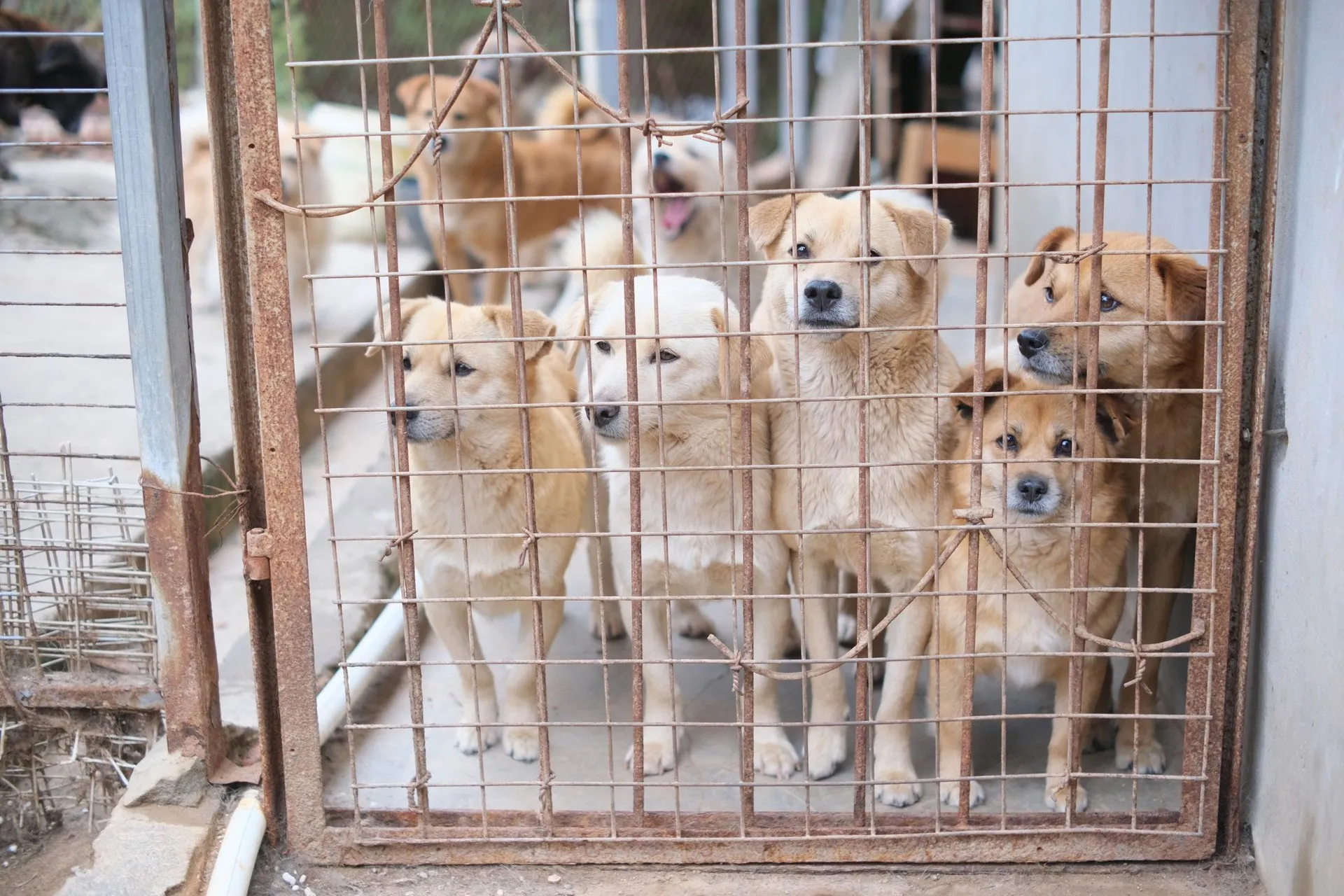
Despite five separate enforcement agencies, all five funnel animals to one shared shelter, the government-run Wake County Animal Center at 820 Beacon Lake Drive: "Wake County does provide animal sheltering for the entire county at the Wake County Animal Center." But sheltering is shared while enforcement is not: "Other municipalities in Wake County (City of Raleigh and Towns of Cary, Garner, and Holly Springs) issue their own citations and collect their own payments. Wake County does not accept payments for citations issued by other agencies." Our adopting a dog in Raleigh guide covers what this shared facility means for adoption specifically.
Here is the same split as a grid, showing how enforcement divides five ways while sheltering does not divide at all.
| Agency | Area it enforces | Where its strays go |
|---|---|---|
| City of Raleigh Animal Control | Raleigh city limits | Wake County Animal Center |
| Town of Cary, municipal officers | Cary | Wake County Animal Center |
| Town of Garner, municipal officers | Garner | Wake County Animal Center |
| Town of Holly Springs, municipal officers | Holly Springs | Wake County Animal Center |
| Wake County Animal Control | Rest of the county, plus unincorporated areas of the four towns | Wake County Animal Center |
No license, anywhere, confirmed three separate ways
This is the single biggest fact in this guide, and it applies uniformly no matter which of the five jurisdictions you live in. Raleigh's own leash-law page states: "Dog and Cat Tag Program. Effective July 1, 2012, the City no longer requires dog and cat tags." Raleigh's own dog-park FAQ confirms it a second time, directly: "Is my dog required to have a city license? No. The City of Raleigh does not require dog owners to apply for a City pet license." Wake County's own Chapter 91 ordinance has no license section at all in its table of contents, only rabies-inoculation requirements, and the county's own Pet Identification page recommends rather than requires ID tags and microchips: "Dogs - All dogs should have ID tags securely attached to their collars. ...
Wake County's ordinance is fully readable, and it is not Raleigh's law
Wake County's own Chapter 91, "Animals," is hosted on codelibrary.amlegal.com and is fully readable, including a detailed dangerous-dog process, a six-foot restraint definition, and a specific fine schedule. None of this Chapter 91 text is legally Raleigh's own ordinance, since Wake County Animal Control has no jurisdiction inside Raleigh city limits. A reader who lives inside Raleigh and cites Wake County's ordinance to a Raleigh officer would be citing the wrong law entirely. Our dangerous dogs in Raleigh guide covers exactly what Chapter 91 says and where Raleigh's own equivalent process is confirmed to exist but not independently readable.
Raleigh's own ordinance is blocked at the source, for the fourth time in this corpus
Raleigh's own municipal code (Raleigh City Code, Part 12, Chapter 3, "Animals") sits on Municode, and Raleigh's instance returns the same generic, byte-identical shell whether the node ID is real or invented, the same failure mode already catalogued for Albuquerque's, Tucson's, and Santa Fe's Municode instances. This means the exact operative leash-length figure, the exact base fine schedule, and the exact dangerous-dog determination process specific to Raleigh are not quoted verbatim anywhere in this series; what raleighnc.gov's own plain-language pages state about these topics is the city's own paraphrase, not the ordinance's codified text.
Two different phone numbers for the same agency, both government, both current
Raleigh's own animal-control page lists "919-831-6311" as its public number. Wake County's own animal-control jurisdiction page, in the same table naming all five agencies, lists "Raleigh Animal Control: 919-829-1911," a different number entirely.
State law confirms Raleigh must have a dangerous-dog process, even though it isn't readable
North Carolina state law requires every "county or municipal authority responsible for animal control" to designate a person or Board for dangerous-dog determinations under NCGS 67-4.1(c). Our North Carolina dog bite law guide covers what the state statute actually says and how it interacts with a dangerous-dog designation.
The one leash-length figure, and where it actually comes from
Our where dogs are not allowed in Raleigh guide covers this gap and every other restriction in full.
What a resident or visitor should actually check first
Given all of this, confirm which of the five agencies actually has jurisdiction at your specific address before assuming any specific rule applies to you, since Raleigh's own police-department-run animal control, Wake County's own separate ordinance, and three other municipal agencies all operate independently despite sharing one shelter. If you're inside Raleigh city limits, know that the detailed Chapter 91 rules you might find online for "Wake County" do not apply to you, and that Raleigh's own equivalent rules remain largely unreadable at the source. Our moving to Raleigh with a dog guide walks through this exact sequence as a new-resident checklist.
The two organizations you'll encounter beyond enforcement
Beyond the five enforcement agencies, two more organizations play a role in this ecosystem worth knowing apart from each other early. The government-run Wake County Animal Center handles adoptions and sheltering for the entire county. The independent nonprofit SPCA of Wake County, despite the similar name, is an entirely separate organization with its own separate fee schedule. Our adopting a dog in Raleigh guide covers a real fee discrepancy this project's research found between the two, worth understanding before you assume either name implies the other's pricing.
Confirm rather than assume, given how much of this system doesn't work the way you'd expect
Raleigh is a genuinely unusual city in this project's roadmap on several fronts at once: no license anywhere, a blocked municipal code that hides the exact leash length and base fine, two different phone numbers for the same agency, and two similarly-named organizations with different adoption fees. None of these gaps individually would be unusual on their own, but together they mean a Raleigh-area dog owner benefits more than most from actually confirming details directly rather than assuming a rule works the way it does in a more typical city. This guide and the rest of this series exist specifically to surface where those confirmations matter most.
Sourcing a rule to the right jurisdiction, every time
The single discipline this guide asks you to carry into every other guide in this series: before repeating a specific number, whether a leash length, a fine amount, or a dangerous-dog process detail, confirm which of the two governing jurisdictions, city or county, that number actually comes from. Wake County's own Chapter 91 is detailed and fully readable, which makes it tempting to treat as the default answer for Raleigh questions generally. It isn't. Our dangerous dogs in Raleigh guide is the clearest illustration of this trap in the entire series, since Wake County's detailed rules sit right next to Raleigh's own unreadable equivalent, and the two are easy to conflate if you're not paying attention to which government wrote which rule.
Where each topic gets its own full treatment
Our Raleigh dog parks guide covers all ten official off-leash locations. Our Raleigh dog fines guide collects every confirmed penalty for both jurisdictions. Our pets in parked cars in Raleigh guide covers North Carolina's specific rescue-authority statute. Bookmark whichever applies most directly to your own situation.
Frequently asked questions
Does Raleigh require a dog license? No. The city dropped its dog and cat tag program in 2012 and its own dog-park FAQ confirms no city pet license is required.
Does Wake County require a dog license? No. Wake County's own ordinance has no license section, only a rabies-inoculation and tag requirement. ID tags and microchips are recommended, not mandatory.
Who enforces animal control in Raleigh, the city or the county? The City of Raleigh, through a unit of the Raleigh Police Department. Wake County Animal Control has no jurisdiction inside Raleigh city limits.
Is Wake County's dangerous-dog ordinance Raleigh's law too? No. Chapter 91 is Wake County's own ordinance and applies only outside Raleigh, Cary, Garner, and Holly Springs. Raleigh has its own separate process required by state law, but it is not independently readable through the blocked Municode instance.
What is the leash length in Raleigh? Only one confirmed figure exists anywhere in Raleigh's own published material, 6 feet, and it comes from the Parks and Recreation greenway rules, not the animal-control ordinance itself.
Where do strays from all five agencies end up? The same shared facility, the government-run Wake County Animal Center at 820 Beacon Lake Drive in Raleigh, even though each agency issues its own citations separately.
Sources
- City of Raleigh, Animal Control
- Wake County, Animal Control
- Wake County, Chapter 91 Animals, codelibrary.amlegal.com
- City of Raleigh, Dog Tethering Ordinance and Leash Law
- City of Raleigh, Dangerous and Nuisance Animals
No Raleigh City Code ordinance text could be verified through the blocked Municode instance. Nothing from that host is cited above.