Sep 3, 2026
Pima County Dog License: Two Fee Schedules, $5 Apart
The county's codified ordinance and its own consumer web page disagree on the licence fee by exactly $5 in every category. Here is both figures, the late fees, and what to actually pay today.
Tucson, Arizona8 min readPet Care & Services
Every dog in Pima County, whether you live inside Tucson's city limits or in the unincorporated county, is licensed by the county, not the city. Tucson's own code says so directly: the city adopts whatever fee schedule the county sets rather than publishing its own figures. This guide covers that fee schedule, and a real discrepancy between two of the county's own official sources that this guide does not try to paper over.
The requirement
Verbatim, Pima County Code 6.04.070(A): "An owner shall have dogs three months of age or over vaccinated against rabies and licensed. Upon moving to Pima County, an owner must comply with these vaccinating and licensing requirements within thirty days or arrival." A dog already licensed elsewhere in Arizona does not need a second licence here, verbatim: "Exception: Animals with a current license from any Arizona jurisdiction are not required to be licensed in Pima County."
The county's own consumer-facing page confirms the same structure in plainer language: "Every dog three months of age or older which is kept within Pima County for 30 days or longer is required to be vaccinated for rabies and licensed by Pima County. The rabies vaccination must be given by a veterinarian, and you must have proof of vaccination to get a license."
The expiry is tied to the vaccine, the same structure as Los Angeles and Miami
Verbatim: "A license is good for no longer than a year and expires when the vaccination expires. Rabies vaccinations are good for either one or three years, and the year a license expires depends on which year of the vaccination term the license is based on." This is the same vaccine-anchored expiry structure documented in our Los Angeles and Miami-Dade licensing guides, rather than a fixed calendar renewal date.
Two fee schedules, and they do not match
This is the genuine discrepancy worth knowing before you pay. The county's own codified ordinance, banner-dated "2026 S-64. The county's own consumer web page sets a different one. Both are official Pima County sources.
The ordinance's own printed figures:
| Category | Fee, as printed in the ordinance |
|---|---|
| Regular, unaltered dog | sixty dollars |
| Regular, altered dog | fifteen dollars |
| Dogs declared dangerous or vicious | one hundred dollars |
| Senior (65+) or disabled owner, altered dog, limit four per household | ten dollars |
| Household income below the federal poverty level, altered dog, limit four per household | eight dollars |
| Processing/postage fee per license | one dollar |
The consumer page's own printed figures, exactly as shown there:
| Type of Dog | Fee Amount, as printed on pima.gov |
|---|---|
| Altered Dog | $20 |
| Altered Dog, low income owner, limit 4 per household, unincorporated county residents only | $13 |
| Altered Dog, senior or disabled owner, limit 4 per household | $15 |
| Unaltered Dog | $65 |
| Duplicate or transfer-of-ownership license | $10 |
| Dangerous animal license | $105 |
Every figure on the consumer page runs exactly $5 higher than the matching ordinance figure. That pattern is consistent enough to suggest a fee increase applied on the public-facing page ahead of a formal re-codification of the ordinance text, but neither page states this, and we are not confirming it. If you are about to pay a fee today, use the consumer page's current figures. The ordinance is not wrong; it may simply be the older of two official county documents on the same subject.
Late fees match exactly between both sources
Unlike the base fees, the late-penalty schedule is identical wherever it is printed. Verbatim, from the ordinance: "A ten-dollar late penalty will be charged on payments made after thirty days from the expiration date of the license. If the license is obtained one year but no more than two years from the date on which the dog is required to be licensed, an additional penalty fee of twenty-two dollars shall be paid. If the license is obtained two or more years from the date on which the dog is required to be licensed, an additional penalty fee of thirty-six dollars shall be paid." The consumer page states the same three figures: $10, $22, $36.
The tag itself, and a third-party lost-pet service bundled in
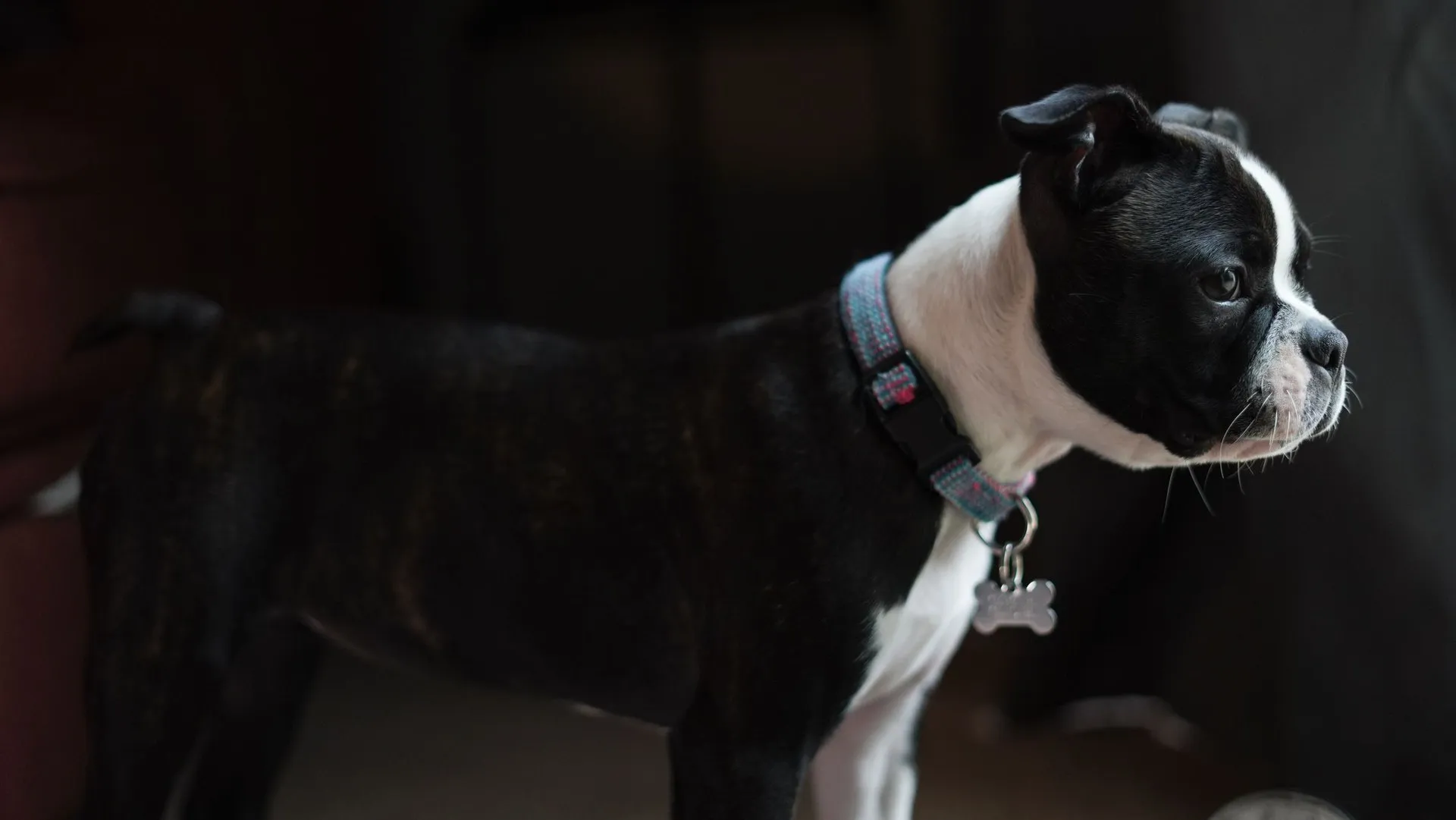
Pima County's licensing is run through a vendor, DocuPet, and the standard tag carries a service most owners would otherwise pay for separately. Verbatim: "When you register your pet in Pima County, you will receive a special license ID tag to attach to their collar. Our licensing process with DocuPet allows residents to select a standard Pima County license tag at no additional charge or upgrade to one of DocuPet's colorful designer tag styles for $15.
The kennel permit, for anyone housing multiple dogs
Verbatim, from the ordinance: "A person operating a kennel shall obtain a kennel permit issued by the Pima Animal Care Center except if each individual dog is licensed. The animal fee for the kennel permit is four hundred dollars or seventy-five percent of the total cost of licensing all the animals individually, whichever is greater."
What happens if you simply do not license your dog
This is treated as a real criminal matter under the ordinance, not a paperwork lapse. Verbatim: "The owner of any dog who fails to vaccinate and license or permit such dog pursuant to this section is guilty of a Class 2 misdemeanor, which is punishable by a fine of not less than one hundred fifty dollars nor more than seven hundred fifty dollars, four months in jail, two years' probation, or any combination thereof." There is a way to reduce the exposure if you act quickly, verbatim: "the fine shall be reduced to seventy-five dollars upon a showing to the court of proof of vaccination and licensing or permitting ... within fifteen days of issuance of the complaint."
Service animals are exempt
Verbatim, from both the ordinance and the state statute it implements: "A service animal, or a dog training to be a service animal.
The vaccination step that has to happen first
State law is explicit that vaccination comes before licensing, not alongside it or after. Verbatim, ARS 11-1010(A): "Before a license is issued for any dog, the owner or a veterinarian must present a paper or electronic copy or telefacsimile of the vaccination certificate signed by a veterinarian stating the owner's name and address, and giving the dog's description, date of vaccination, manufacturer and serial number of the vaccine used and date revaccination is due. ... A dog shall not be licensed unless it is vaccinated in accordance with this article." Have this certificate ready before you start the licensing process, whether online, by mail, or at a 311 Service Center, since the county cannot issue a licence without it.
Why licensing is not optional, statewide
Underneath Pima County's own fee ordinance sits a flat statewide requirement with no carve-out. Verbatim, ARS 11-1017, in full: "It is unlawful for a person to keep, harbor or maintain a dog within the state of Arizona except as provided by the terms of this article." Every fee, every exemption, and every late penalty covered above exists inside the framework this one sentence establishes.
Your licence tag does more than satisfy the law
A current Pima County licence tag is also a practical requirement at specific locations around the city. Tucson's own dog parks require every dog to wear "collars with a valid dog license," per the posted rules covered in our Tucson dog parks guide. A dog without its licence tag can be turned away from an off-leash area even if the owner has technically paid the fee, simply because the physical tag is not on the collar that day.
Your licence matters if your dog is ever accused of dangerous behavior too
A current licence is not just a paperwork requirement; it affects how Tucson's own dangerous-dog process treats your dog. Our dangerous dogs in Tucson guide covers the city's two separate tracks, and notes that a "dangerous animal license" carries its own higher fee once a designation is made, on top of whatever base licence you already hold, which is one more good reason to keep your dog's regular licence current and fully paid up well before any behavior issue could ever realistically put that much higher fee on the table for you. A lapsed licence is an easy, cheap, entirely avoidable problem to fix on your own schedule; a dangerous-animal designation is not something you get to fix on your own timeline at all.
Frequently asked questions
Does Tucson or Pima County license my dog? Pima County does, for every dog in the county, whether you live inside Tucson's city limits or in the unincorporated county. Tucson's own code adopts the county's fee schedule rather than setting its own.
How much does a Pima County dog licence cost? The county's consumer page currently states $20 for an altered dog or $65 for an unaltered one. The county's own codified ordinance states $15 and $60 for the same categories, a $5 gap that is not explained on either source.
When does my Pima County dog licence expire? It is tied to your dog's rabies vaccination expiry, not a fixed calendar date. A one-year or three-year vaccination sets the corresponding licence term.
Do I need a new licence if I move to Pima County from elsewhere in Arizona? Not if your dog already has a current licence from any Arizona jurisdiction. Otherwise you must comply with vaccination and licensing requirements within thirty days of arrival.
What happens if I do not license my dog in Pima County? It is a Class 2 misdemeanor, punishable by a fine between $150 and $750, up to four months in jail, or two years' probation, though the fine drops to $75 if you show proof of compliance within fifteen days of a complaint.
Is a service animal exempt from the licence fee? Yes, both under the county ordinance and under state law, which also waives the fee for an individual using a search and rescue dog.